


Note: This is a longer post. If it gets clipped in your email, just click “View entire message” or open it in your browser to read the whole message.
I’m really excited to share this harvest with you. I picked everything on Thanksgiving day (November 27th), just before driving from Michigan to New York to have my pelvis surgically rebuilt for the 3rd time. It was my 9th surgery related to carrying my 5 kids. It’s a good thing they’re cute!!!
So I had to scramble, since my recovery restrictions wouldn’t have allowed me to do this harvest after I returned. And I wasn’t sure if everything would be ready to be picked.
Not only was everything ready, but after I washed and stored it all in tubs and then left for 9 days for my procedure, everything is still looking good afterward and viable to use! I’m so grateful. It’s really rewarding that even in a cold climate like mine here in zone 6A in southeastern Michigan, I can do succession planting and get at least 2 full harvests in the same bed from the spring through the fall.
Here’s what I’ve picked. And at the end, after the main crops, I’ll show you the shockingly delicious tubers I picked from my African potato mint!!!
Celery
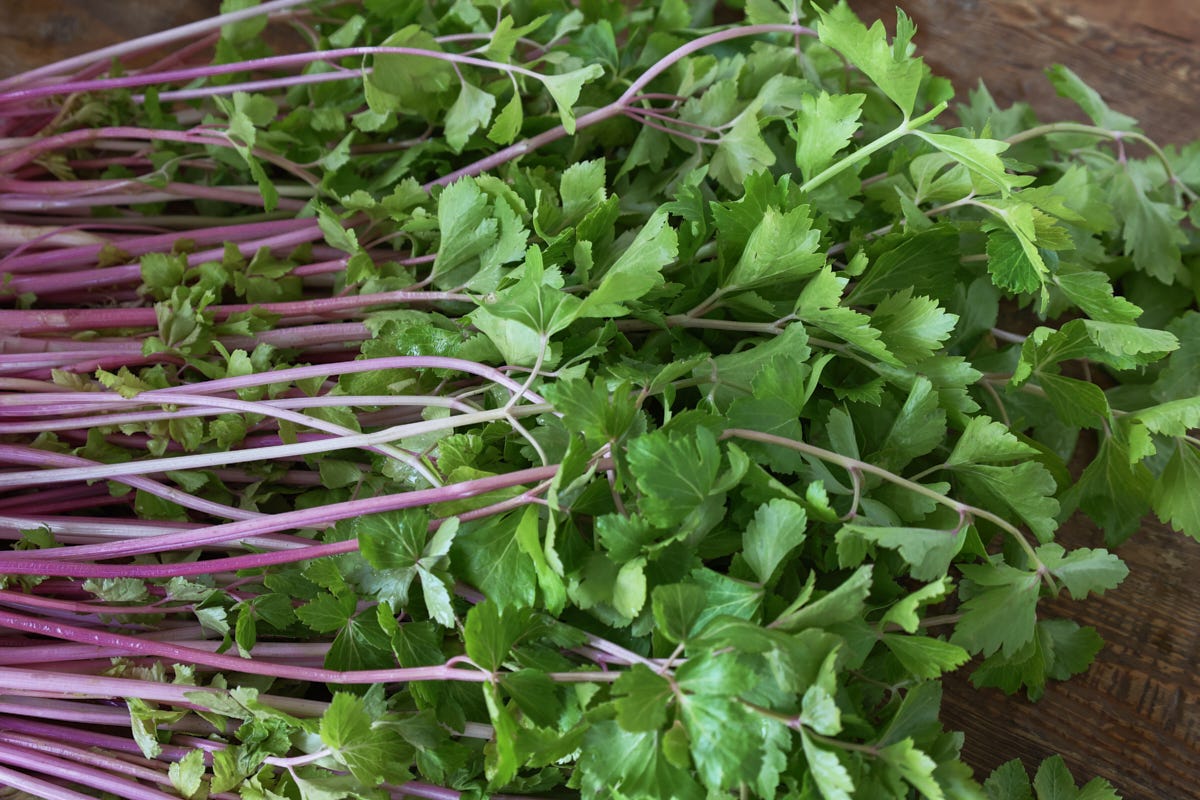
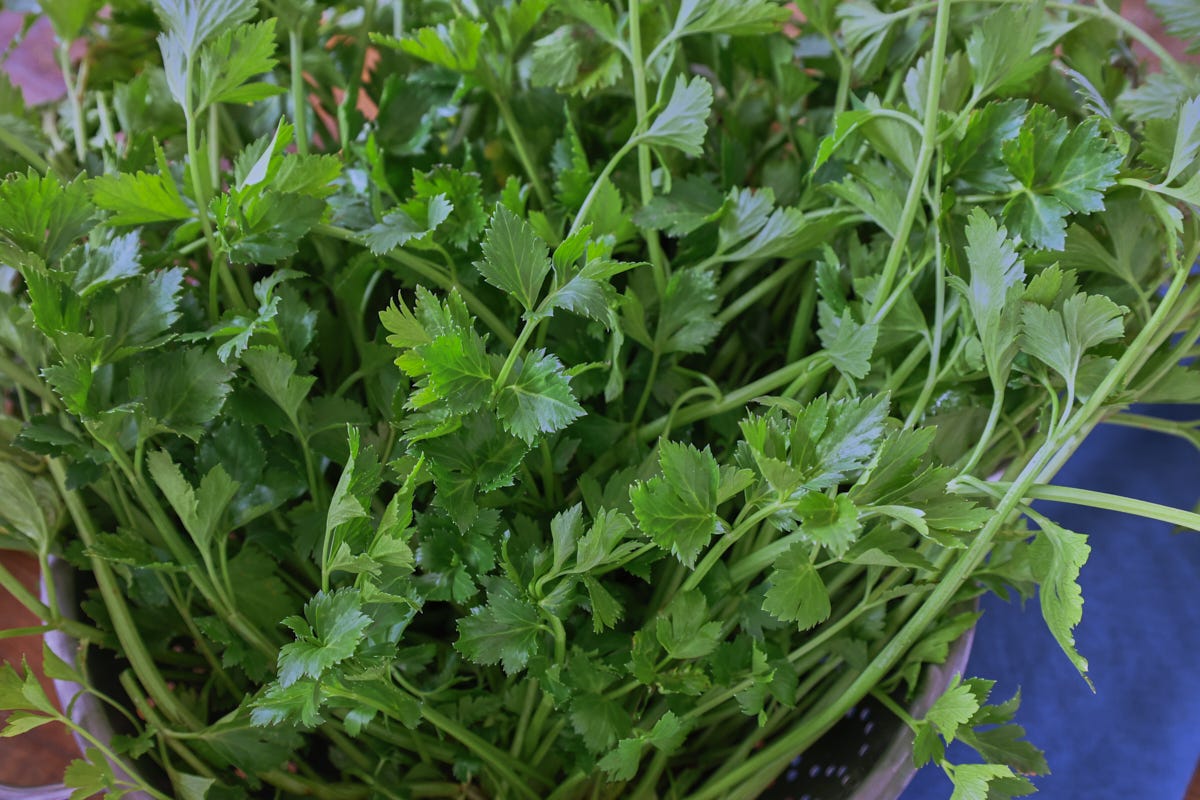
I planted 2 types of celery this year: Chinese pink and Amsterdam cutting celery. The cutting celery is meant to be picked when young and tender. And while my Chinese pink didn’t have time to really bulk up its stems, it was succulent and so flavorful. I’ve definitely found homegrown celery to be worth it. The flavor is more pronounced, savory, and just all-around so much more enjoyable than the grocery store varieties.
Endive
Oh how I love these sturdy greens! These will hold up so well to fall salads, and I’m excited to try them with a traditional French mustard vinaigrette and also my own recipe for black garlic vinaigrette.

Turnips
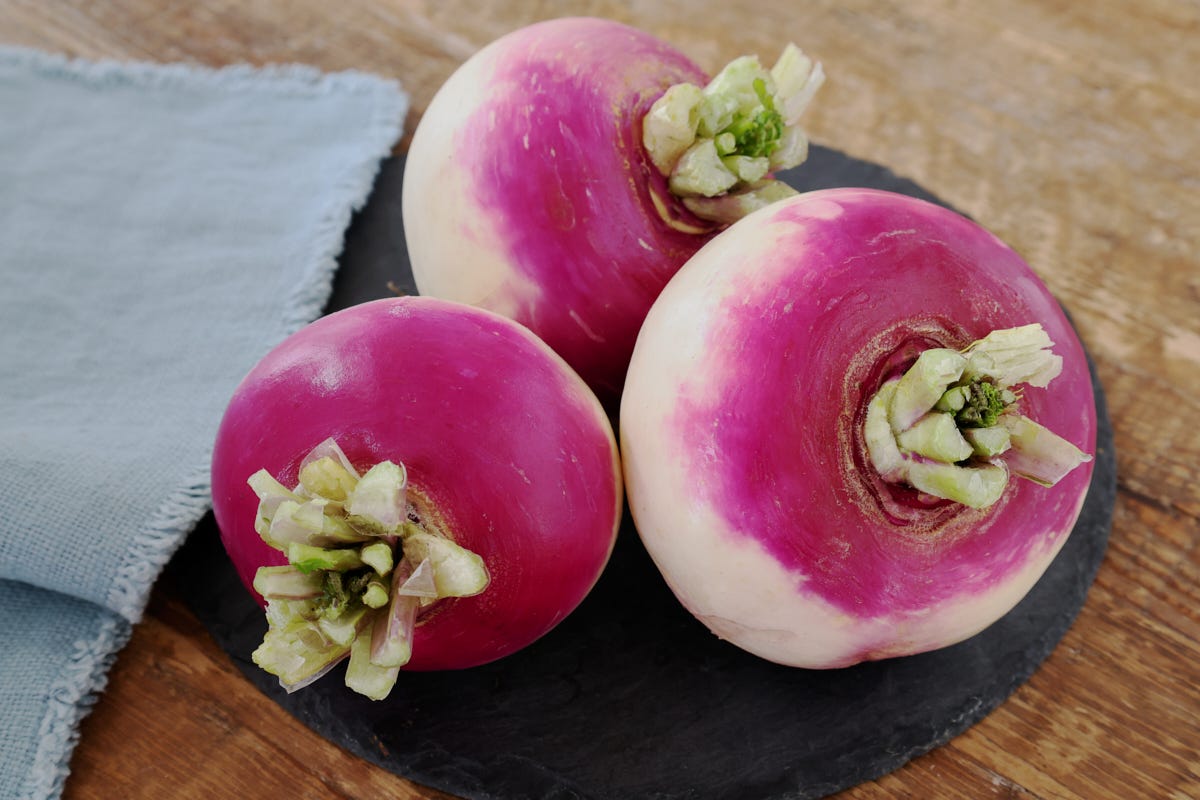
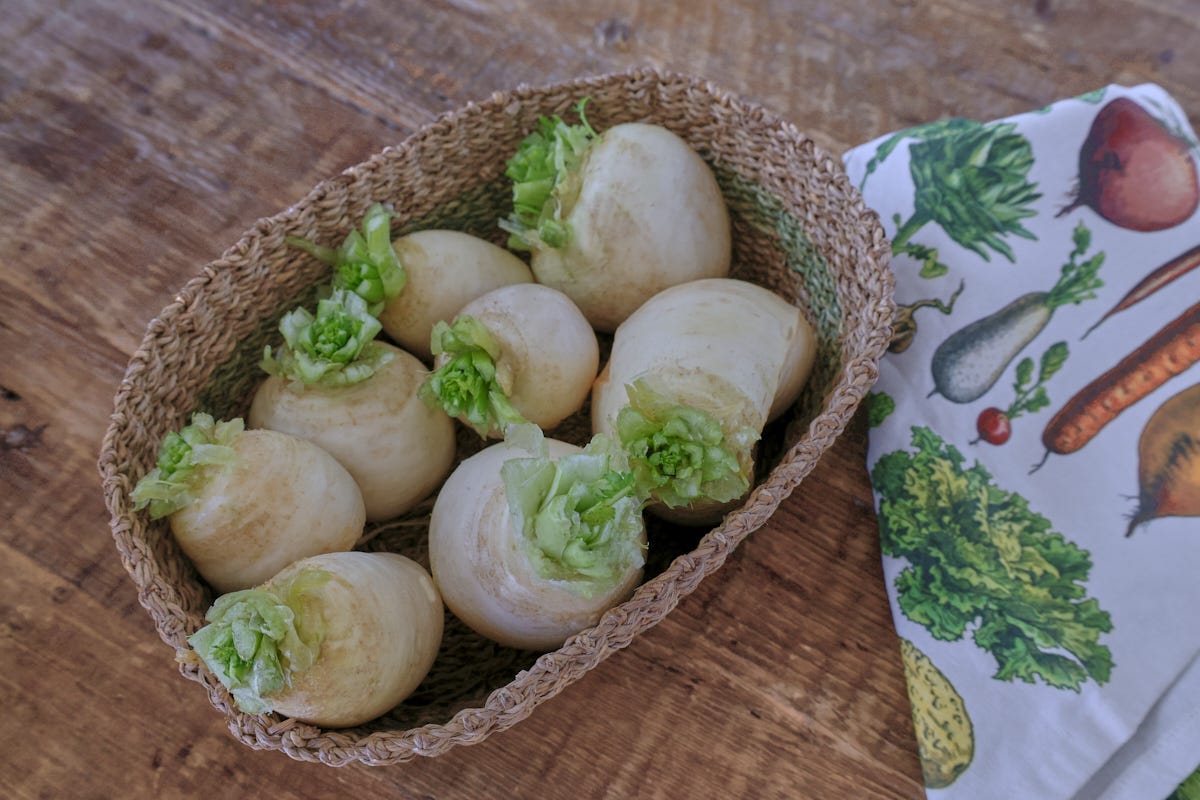
I still need to find more ways to prepare these turnips. I’ve only tried them roasted so far. Do you guys have any favorite plant-based recipes you’d like to share? I need to cook with turnips more often. I love these gorgeous and easy-to-grow veggies!
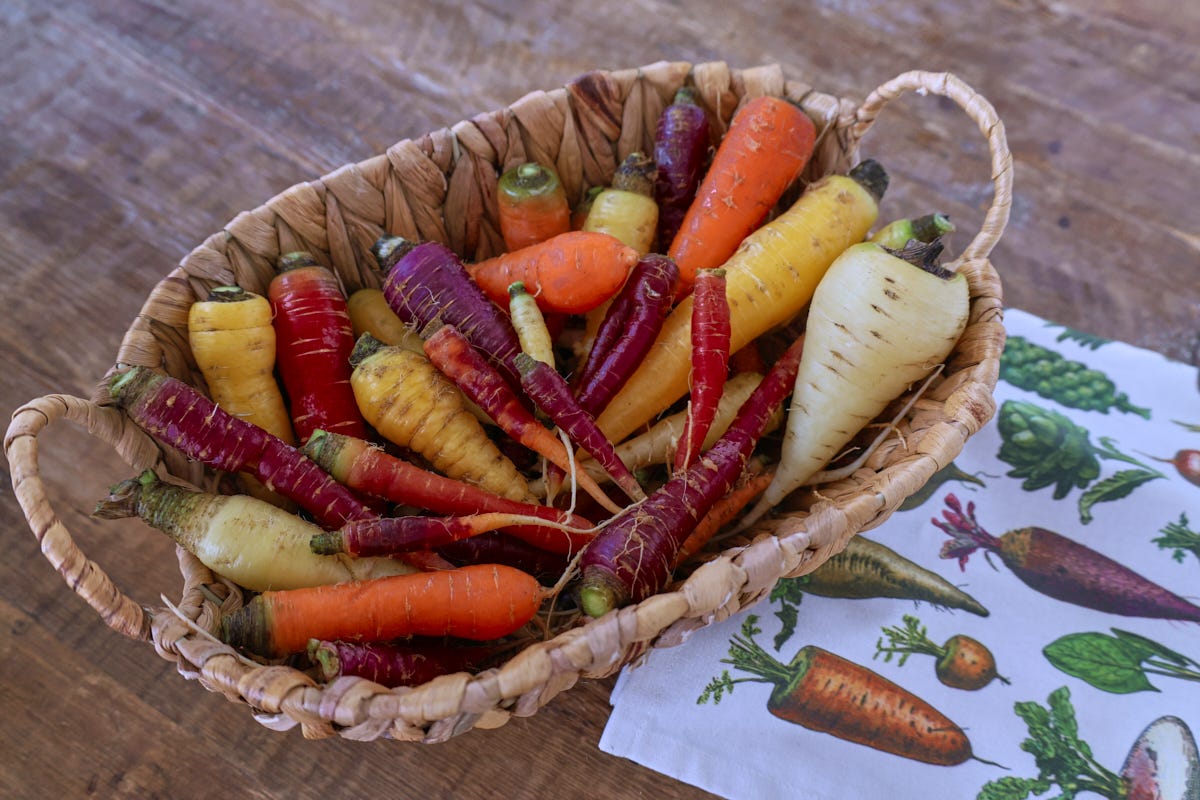
Carrots
The deer took most of my carrots this year, as I’d thought my fence in this bed was tall enough (given how shallow the jumping depth was). But it wasn’t. Sigh. At least I’ve managed to pick a few! These beautifully-colored heirloom varieties have the most wonderful flavor. And the aromatic fragrance of the freshly-dug roots is right up there with my favorite garden veggie scents - pea shoots and tomato leaves.
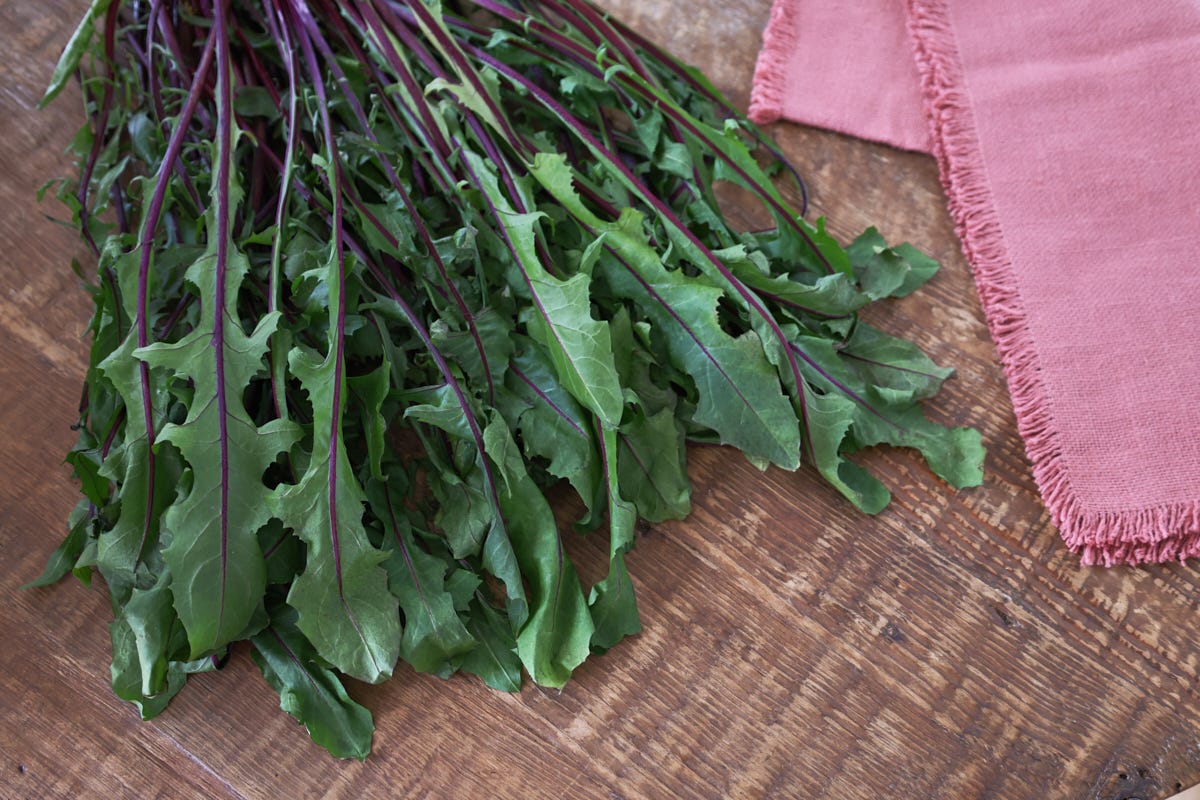
Dandelion
This isn’t the type that pops up in your yard as a weed. This is an Italian heirloom with a nice peppery edge. You can eat it raw, or cook it for a more mellow flavor.
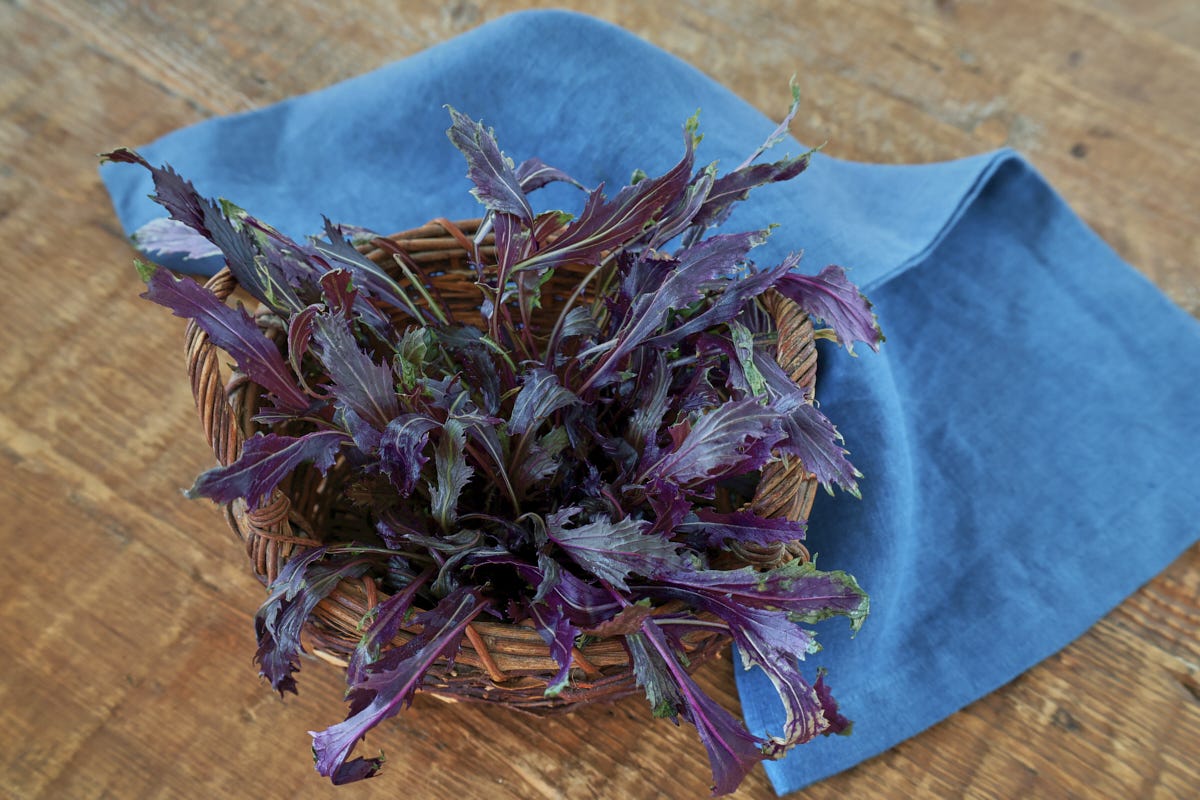
Mizuna
I didn’t even plant mizuna this fall. It must have reseeded. And I’m so glad it did, as it’s such a wonderful green with a mild to medium bite. Mizuna is an important heirloom crop in Japan, where it’s often used in hot pots, blanched, stir-fried, and used in soups.
Mache
This is one of my hands-down favorite salad greens, also known as mâche, corn salad, lamb’s lettuce, or field salad. It has a nutty and mild flavor, and such a delightfully smooth texture.
When we lived in Germany, the little grocery store on our street had Feldsalat, and we were so happy to eat it. We ate it dressed simply in nut oil (walnut, pecan, or hazelnut) and coarse salt. Pure heaven.

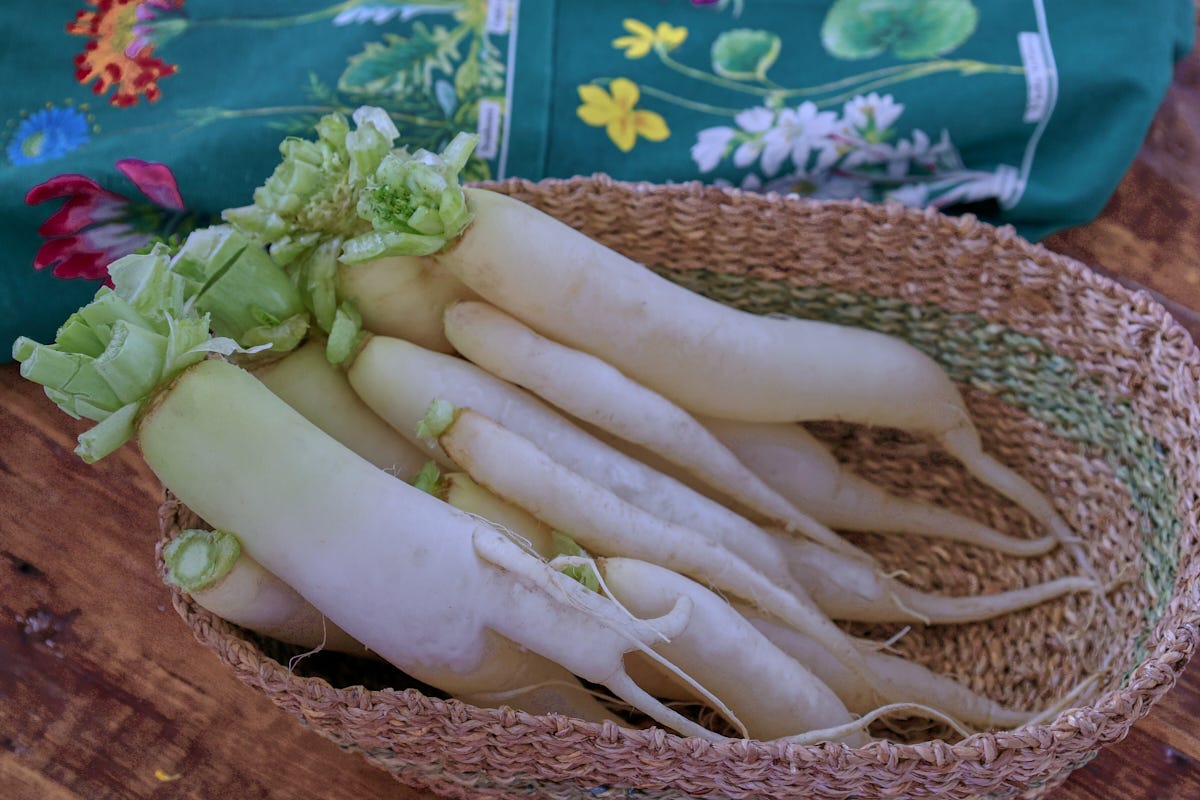
Daikon Radish
This monster below shocked me. I had no idea it had gotten so large! And it sadly snapped off below the part shown in the photo. It was just too hard to dig down far enough to get the whole thing.
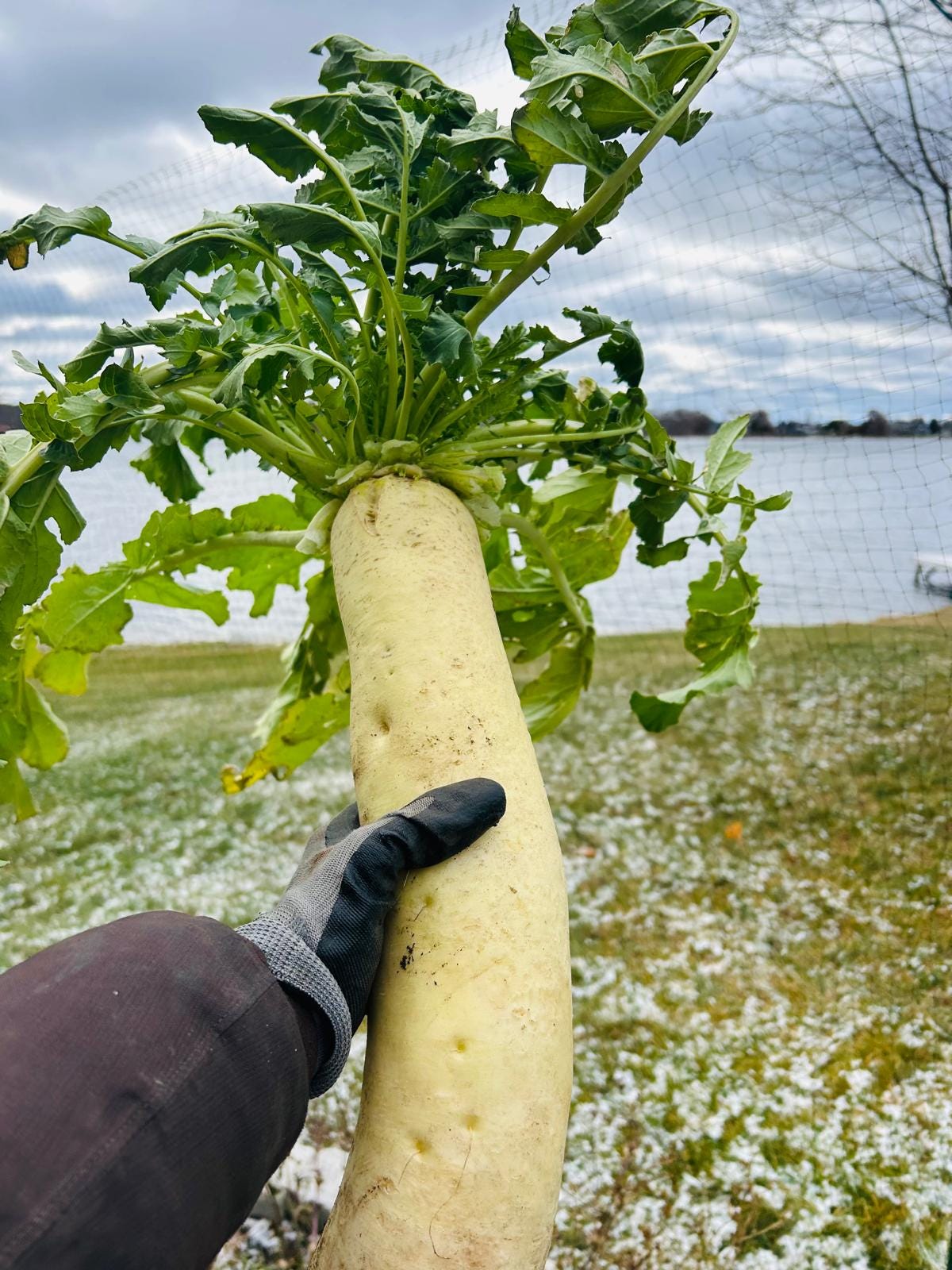
The daikons in the basket below are the same Japanese minowase variety as the giant one in the photo above. I’m not sure how one of them was able to outgrow the rest of them by so much!
This variety is milder than many others, with a clean, juicy, and lightly peppery flavor. And daikons really help to aerate the soil with their long roots, often referred to as tillage radishes. These are a really special crop.
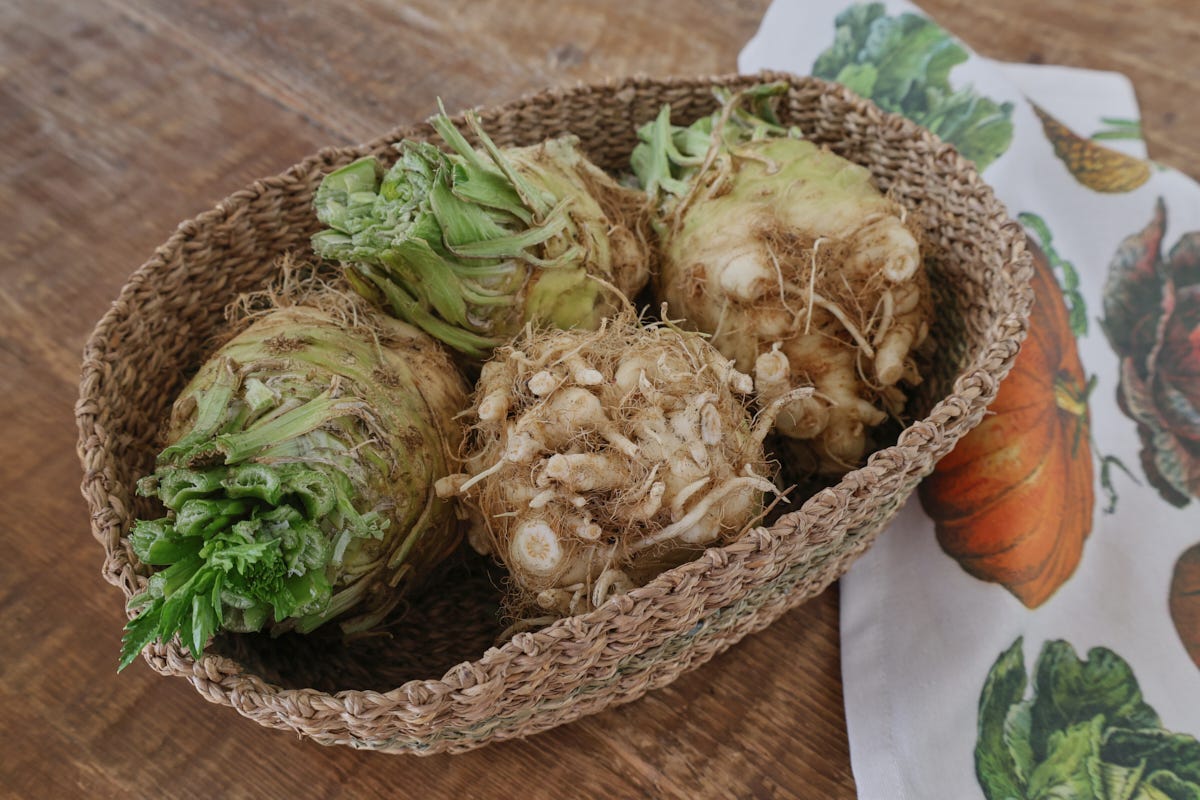
Celery root (celeriac)
These gorgeous gnarled roots can be hard to find in grocery stores nearby. I’m so glad to have this harvest of them, since my recipe for a French céleri rémoulade (celery root salad) is almost ready. I’ll share it in a blog post when it’s done. I can’t wait to do another trial with these homegrown ones!
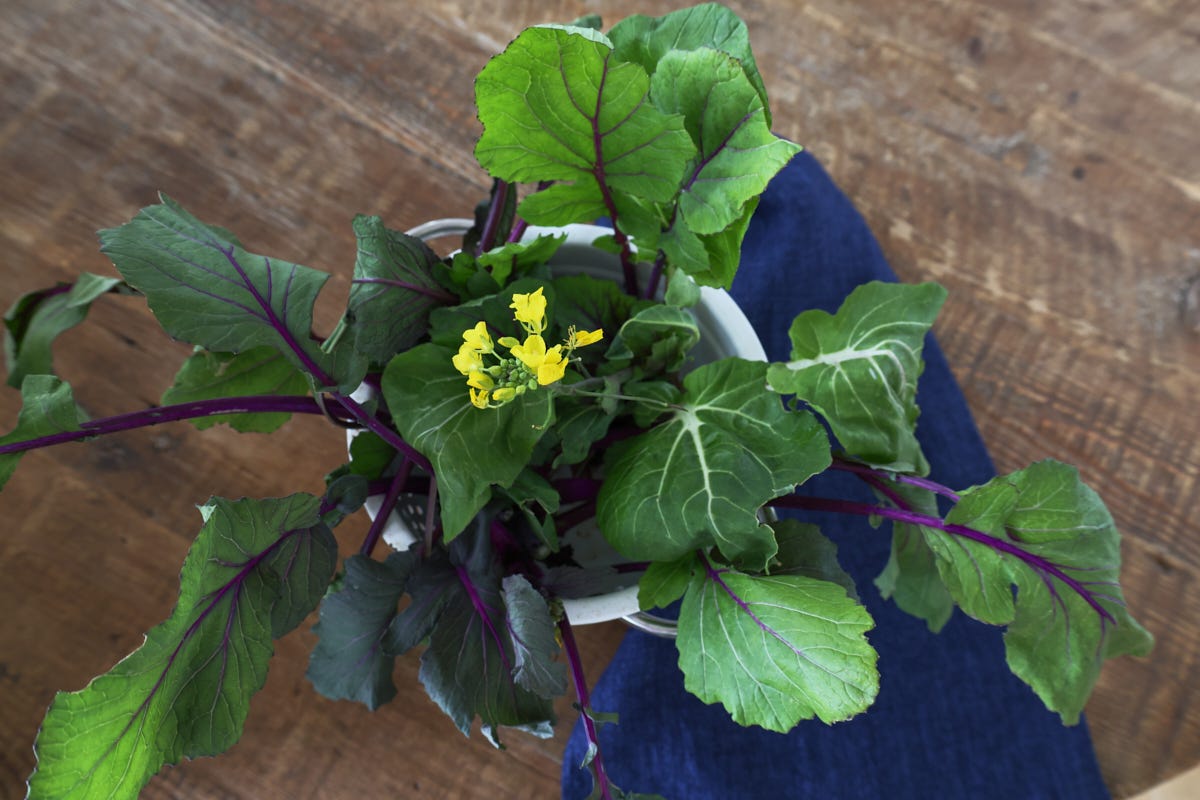
Choy sum
I haven’t tried these yet, and I’m looking for the best dish to make them with. Maybe just simply braised, so I can really discern the flavor. I’m excited to try them, including the leaves, stems, and the even milder and sweeter flowers as well.

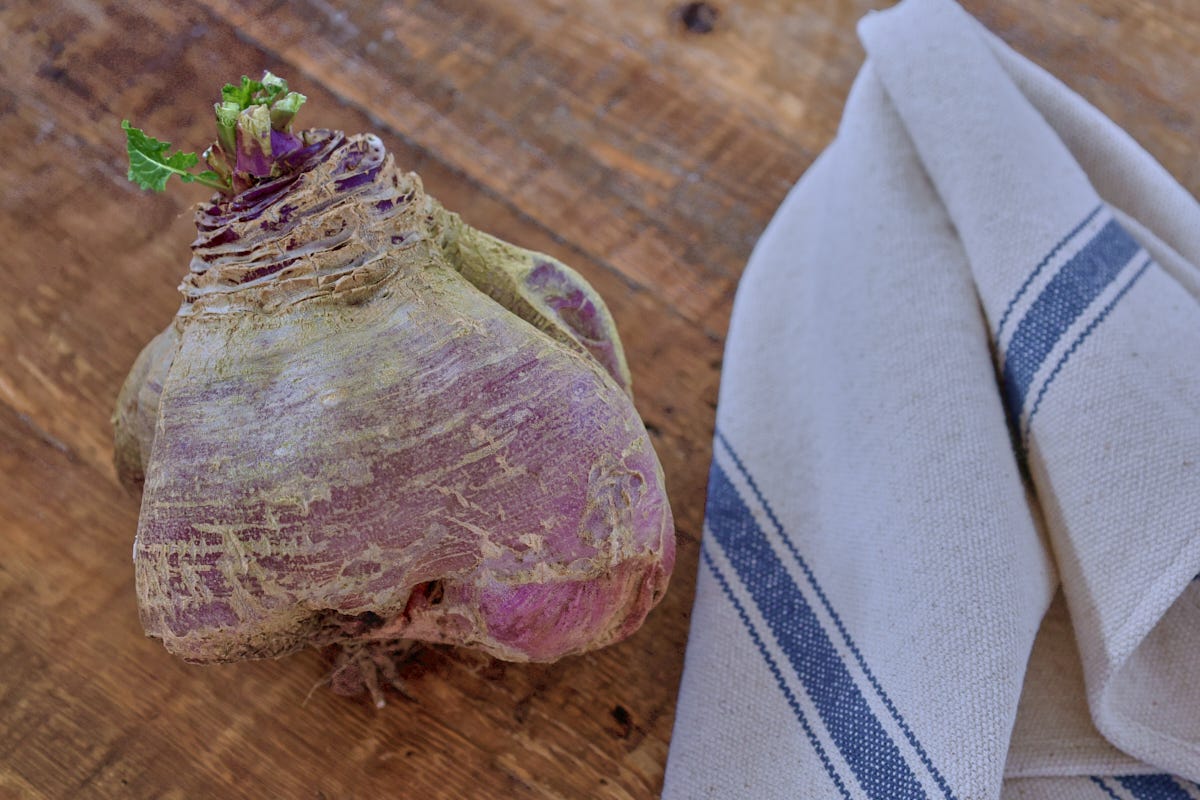
Rutabaga
Remember Phil the Rutabaga? Here’s Phillis! I think she’s gorgeous, lumps and all.
Chinese cabbage
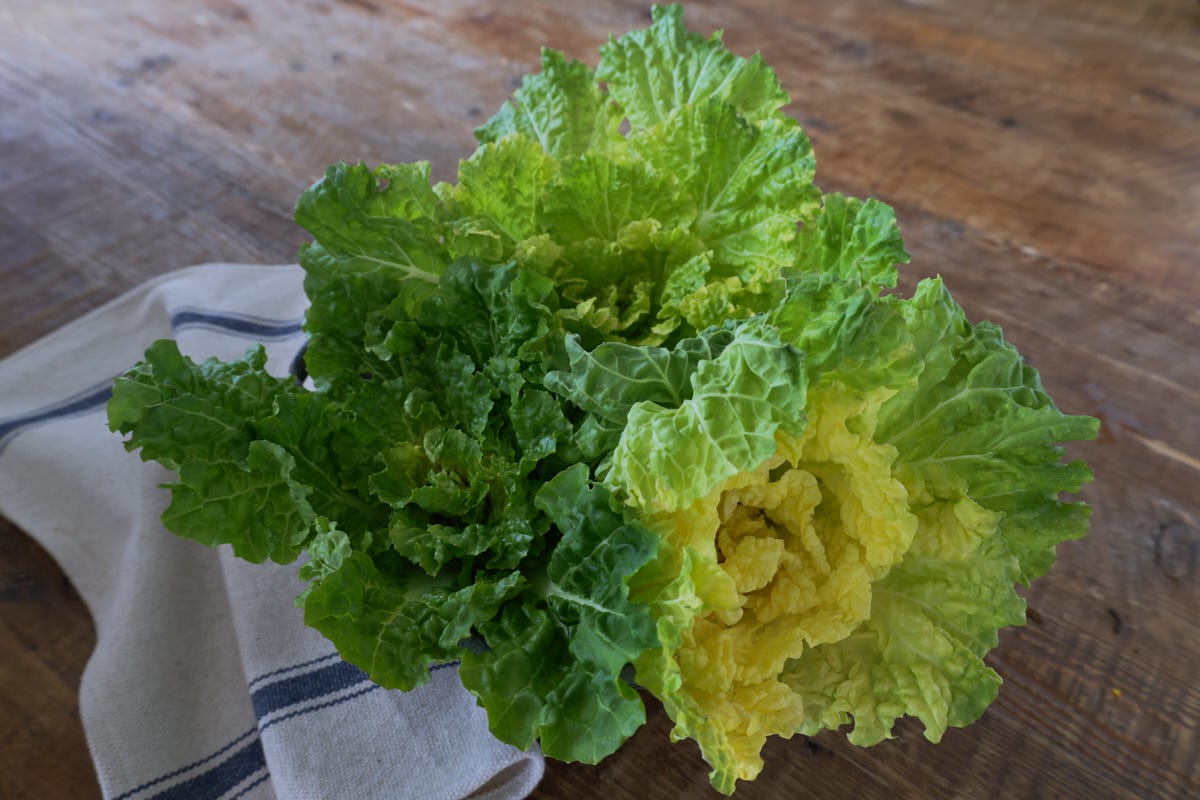
This was the first crop out of this batch that I’ve already cooked with since returning home from my surgery. (And it wasn’t easy with my restrictions, as I had to ask for help to lift everything in the process.)
I made a really comforting congee (Chinese rice porridge) with this head of golden beauty cabbage below, short grain rice, shiitake mushrooms, crispy air-fried tofu, garlic, ginger, soy sauce, and sesame oil. We finished it off with fried shallots and chili crisp, and were all moaning in delight. It was SO good.
Kale
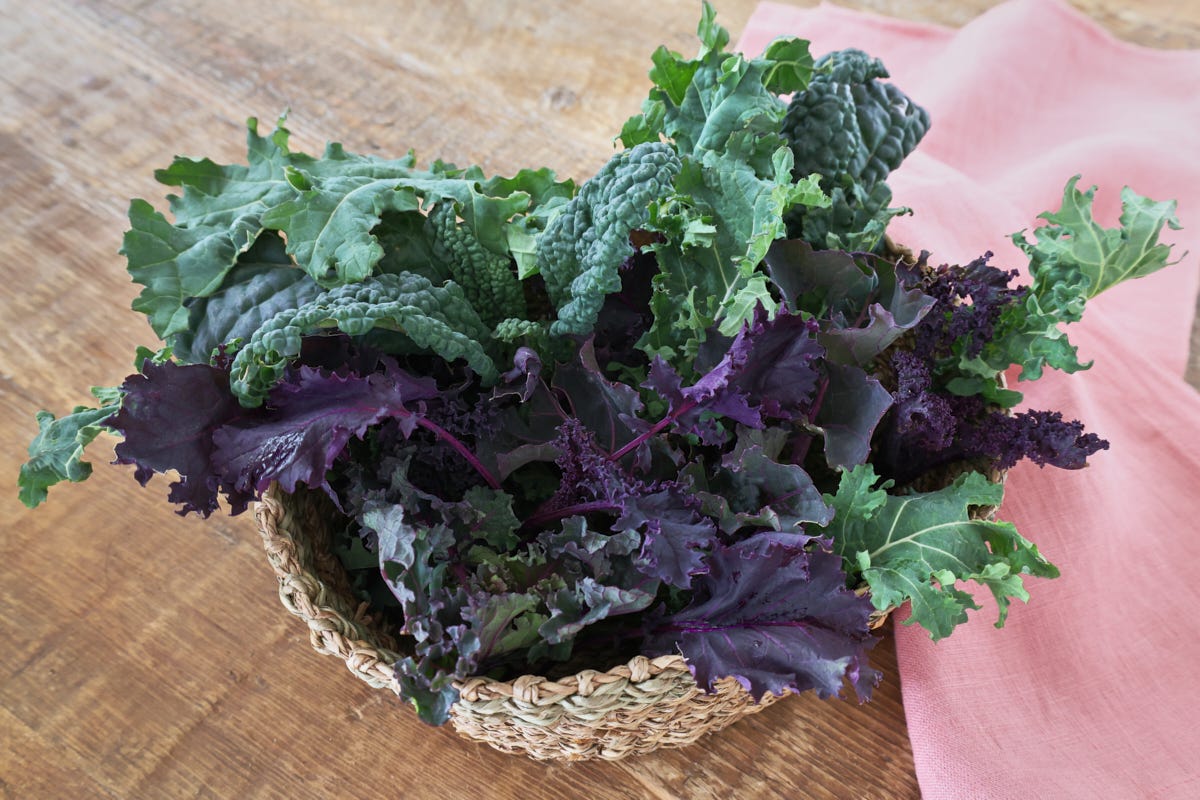
Kale is such an amazing salad green. Even if you dress your salad in advance, the leaves stay crunchy for days in the fridge! I don’t even bother massaging them. I love keeping them as crisp as possible. This is such a special green to grow and eat. And look at all of the gorgeous variations you can find! I just treasure this crop.
Mustard
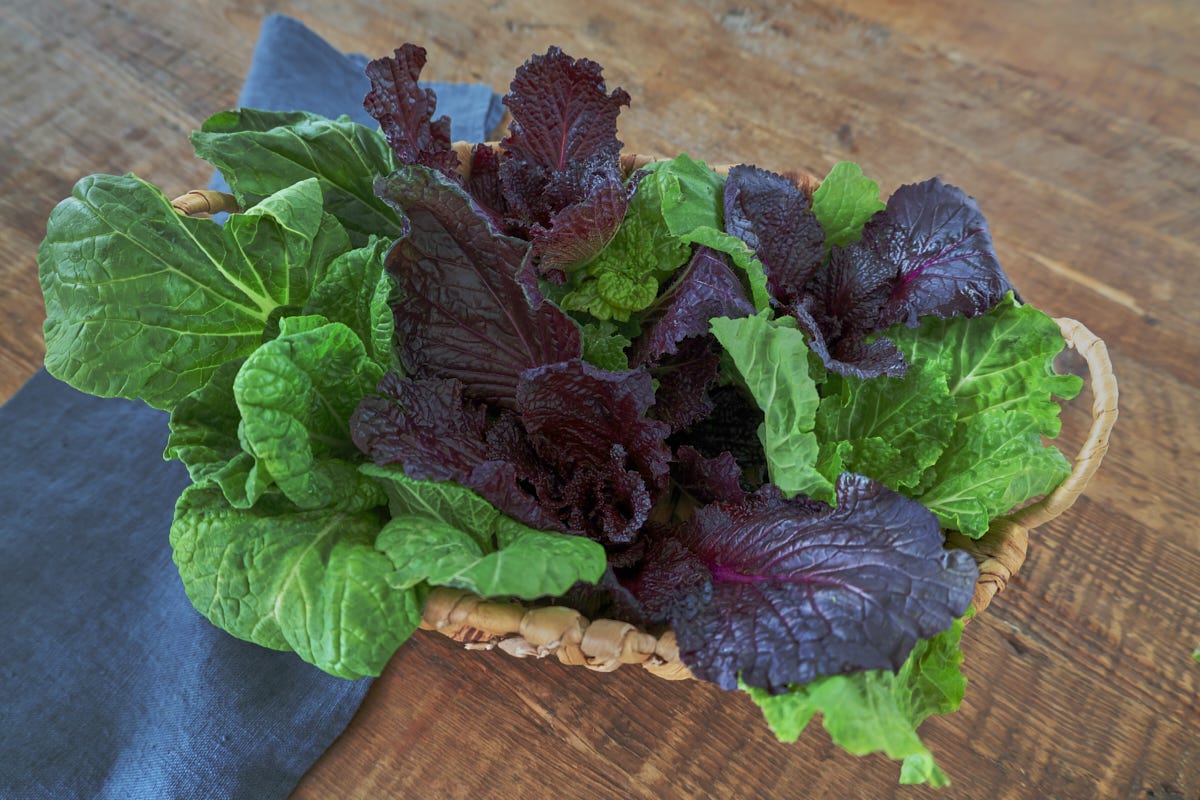
I need to find a really special way to try these mustard greens to really show off their flavor. I’d love to try them blanched and simply dressed, pickled, or stir-fried as they’re commonly prepared in Japan. There are so many wonderful options.
Cardoon
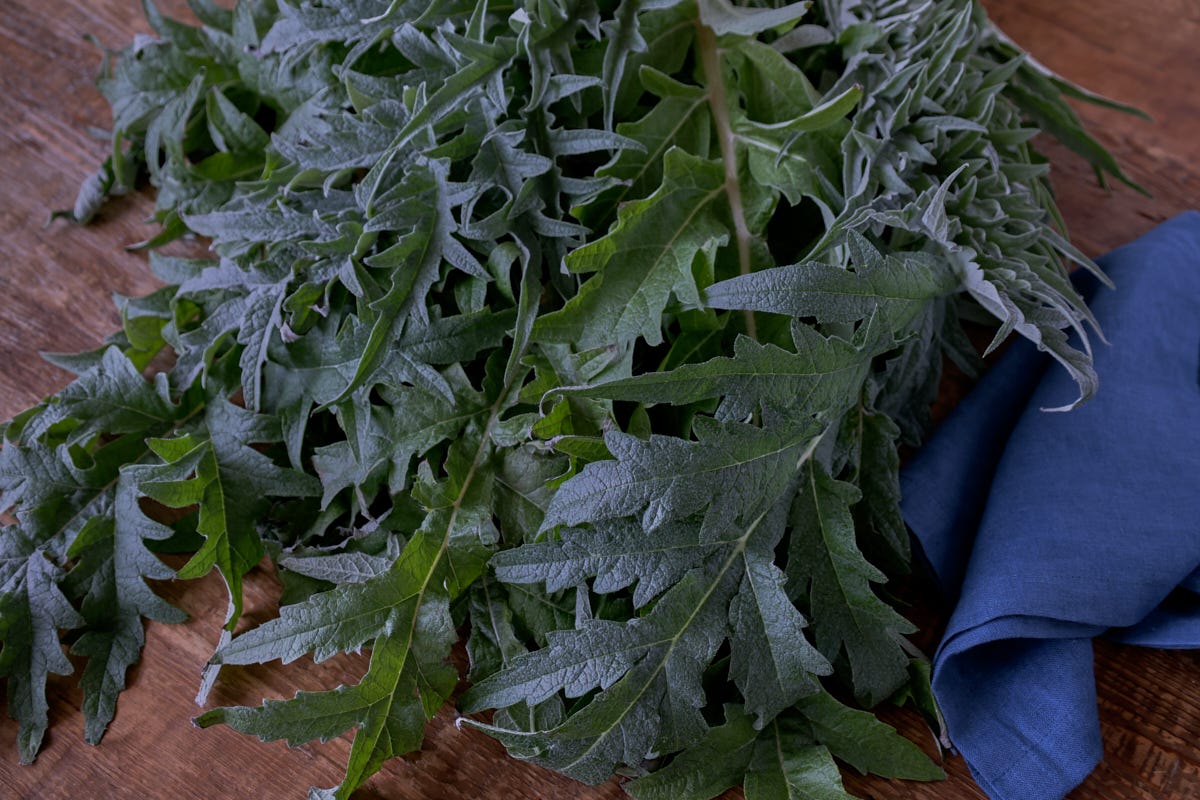
This was my first time growing this stunning Mediterranean thistle. It’s the same species as the globe artichoke, Cynara cardunculus, with the varieties (like my gobbo di Nizzia below) selected for hearty stems rather than flower buds.
I didn’t take the time to blanch these stems as they were growing this year, by tying them together and hilling up with straw. Doing this intentional light reduction both suppresses bitterness and tenderizes the stems before the harvest.
I definitely want to grow them again, and next time I’ll try blanching them as they grow. But I’m so excited to try these stems from this fall’s harvest either way!
Radicchio
Radicchio is a flavorful green with a delightful bitter counterpoint to add to your salad. It’s also wonderful grilled, braised, roasted, or sautéed. It can be a little finicky to germinate directly outside if it’s too warm. I’ve planted them in the past and thought they’d totally failed, only to discover them growing months later when it’s become suitably cold enough for them to sprout.

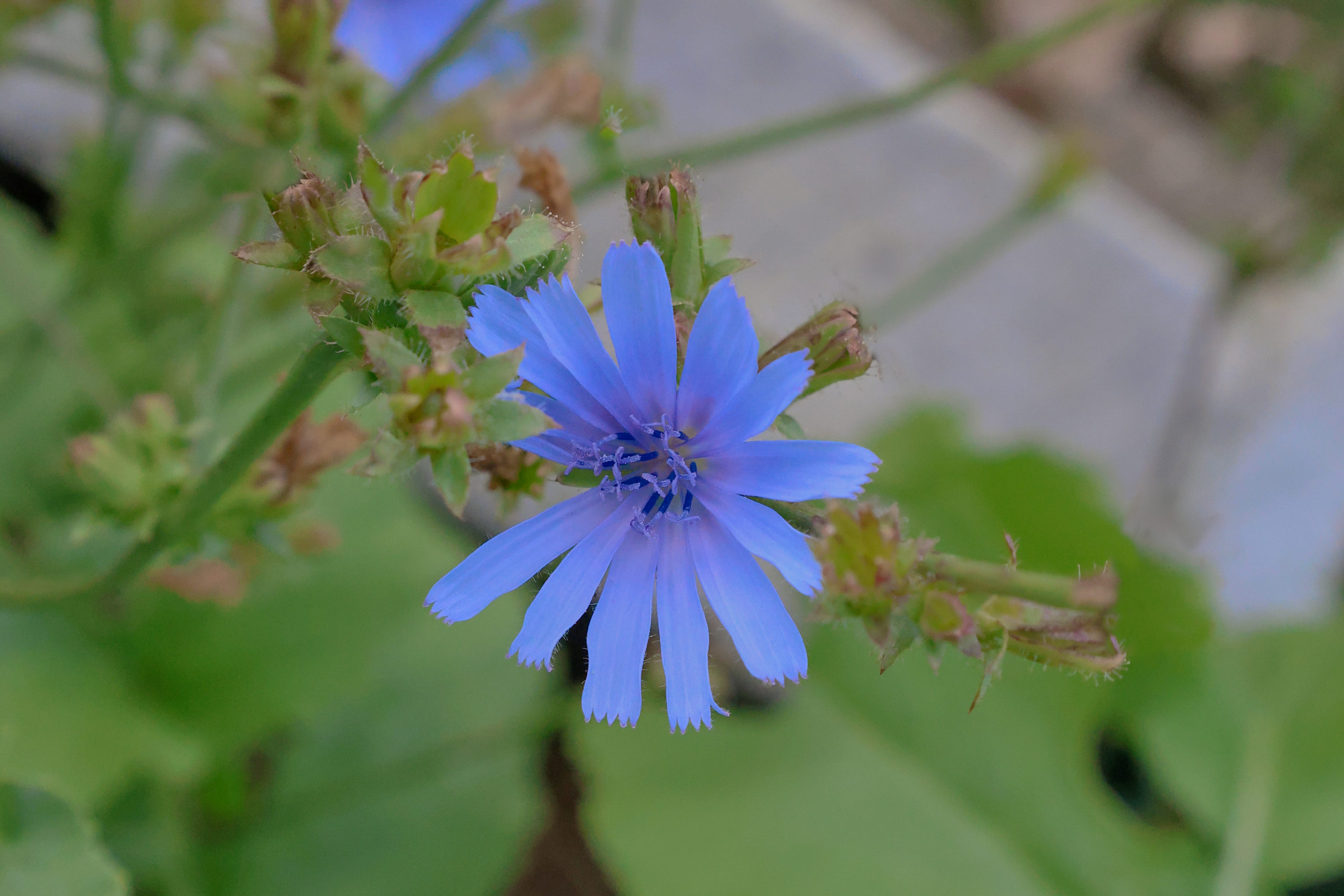
And I was shocked to discover on both my palla rosa radicchio (and even more surprising with my italiko rosso dandelion above), that when I didn’t pick them in time earlier in the summer, they had sprouted blue chicory flowers! Just like the ones I’ve adored seeing on the roadside since I was a kid.
I’ve looked many times at ordering chicory plants to try roasting the roots to add to coffee. I just haven’t done it yet. I’m reading now that while I could technically do this with the roots of my radicchio and dandelion varieties, they aren’t bred for this, and the roots would likely be small and have a low yield.
But now I’m really excited anew to try this root idea. It would be more favorable to find a type of chicory that’s been optimized for chicory coffee. This would be a really exciting project.
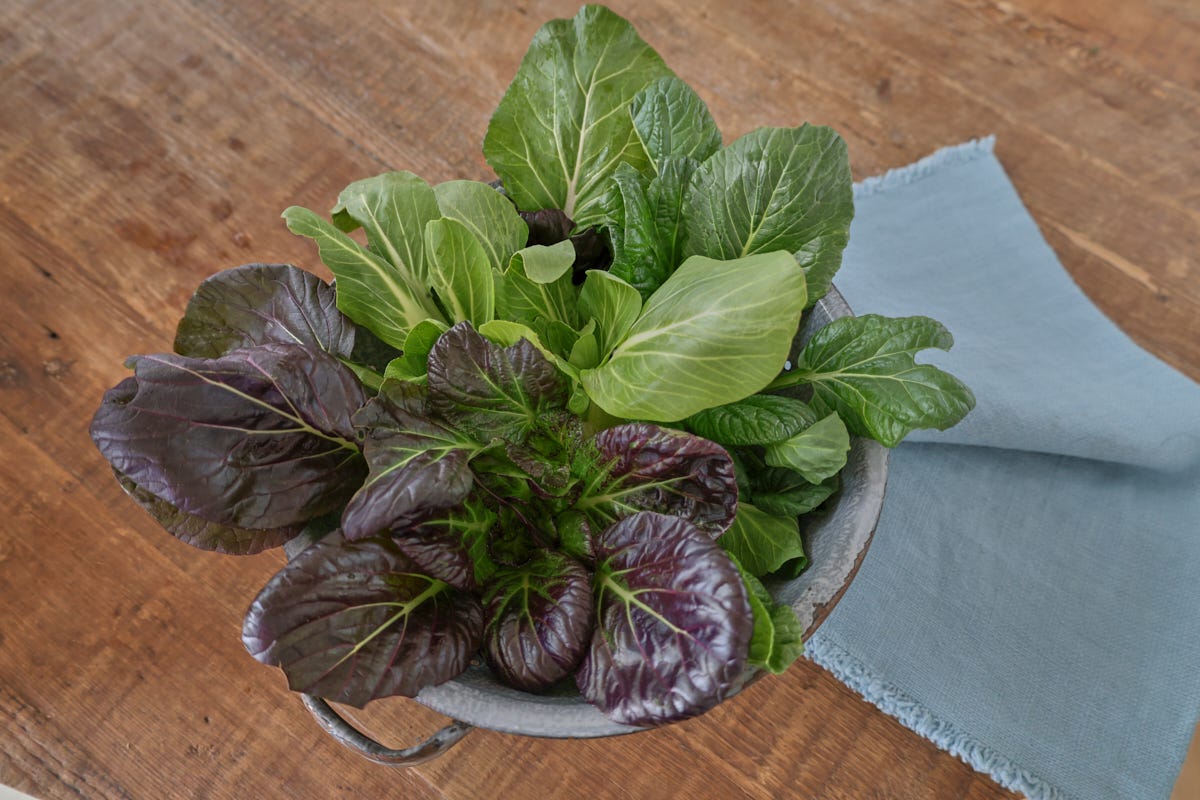
Bok choy
My daughter Mio and I especially love bok choy. It’s so good in a bowl of noodles and broth. We often had this at our beloved neighborhood noodle place in Shanghai that we miss so much. The crisp, mild stems and the smooth, nutty greens really make the difference in so many dishes. I’m really happy about this harvest.
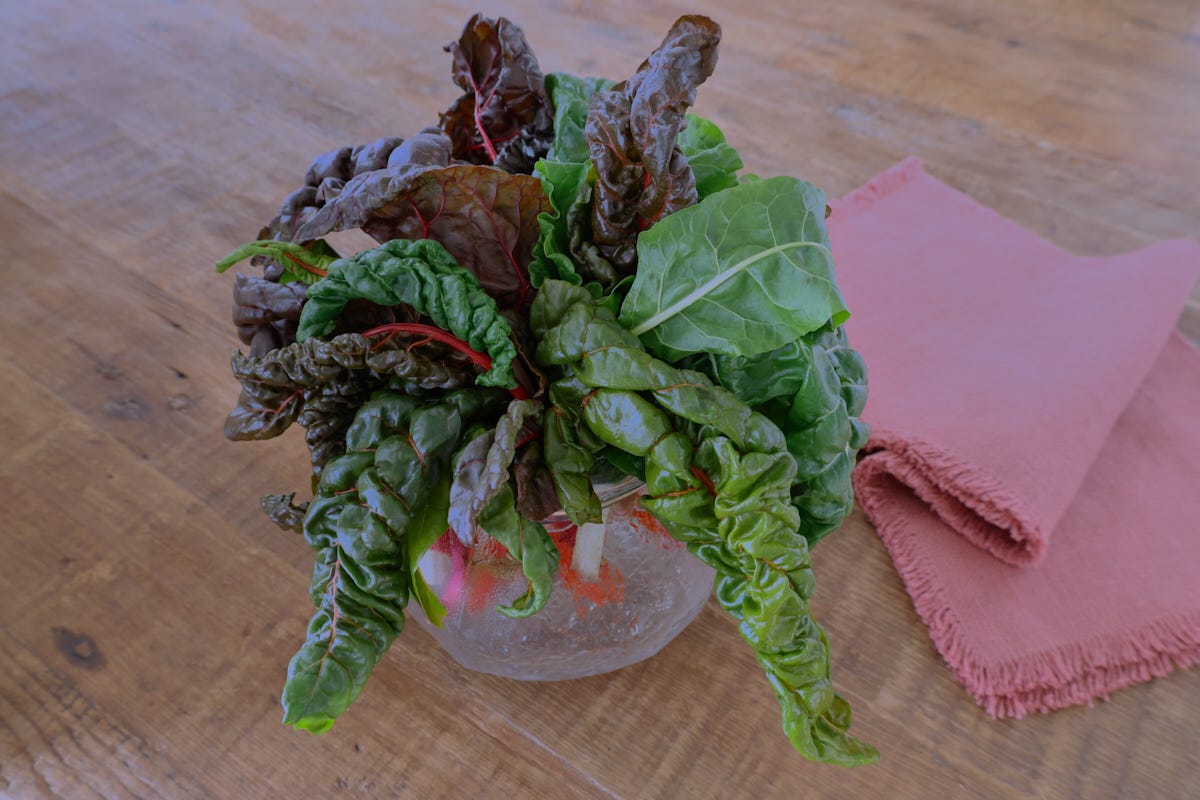
Swiss chard
I have an upcoming recipe post that I’m really excited to share with you from Corsica using Swiss chard. This green is so earthy and savory, and the stems are so vibrantly-colored. I just love it.
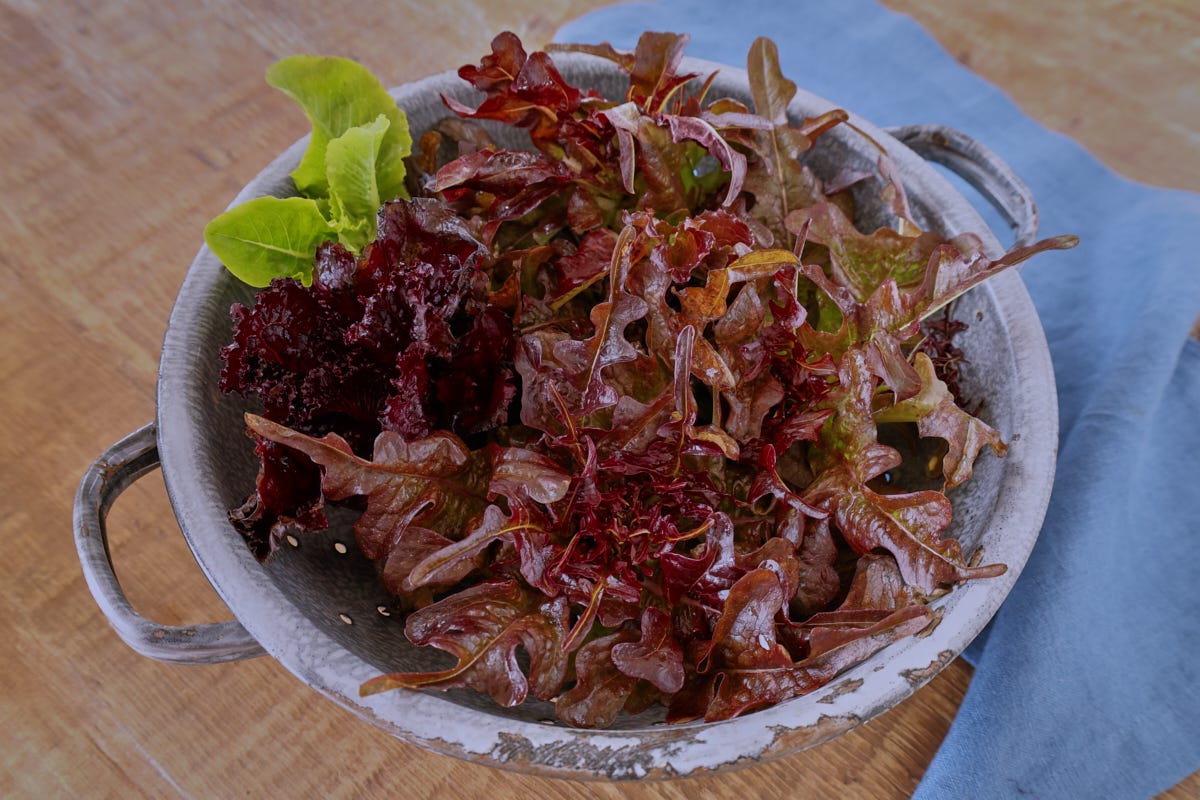
Lettuce
Sigh, homegrown lettuce is just the best. There’s nothing like it at the store. It’s so, so worth growing for yourself to experience this. And you can fit in multiple rounds of it, at least in the spring and fall if you have warm summers. And it’s so easy to grow.
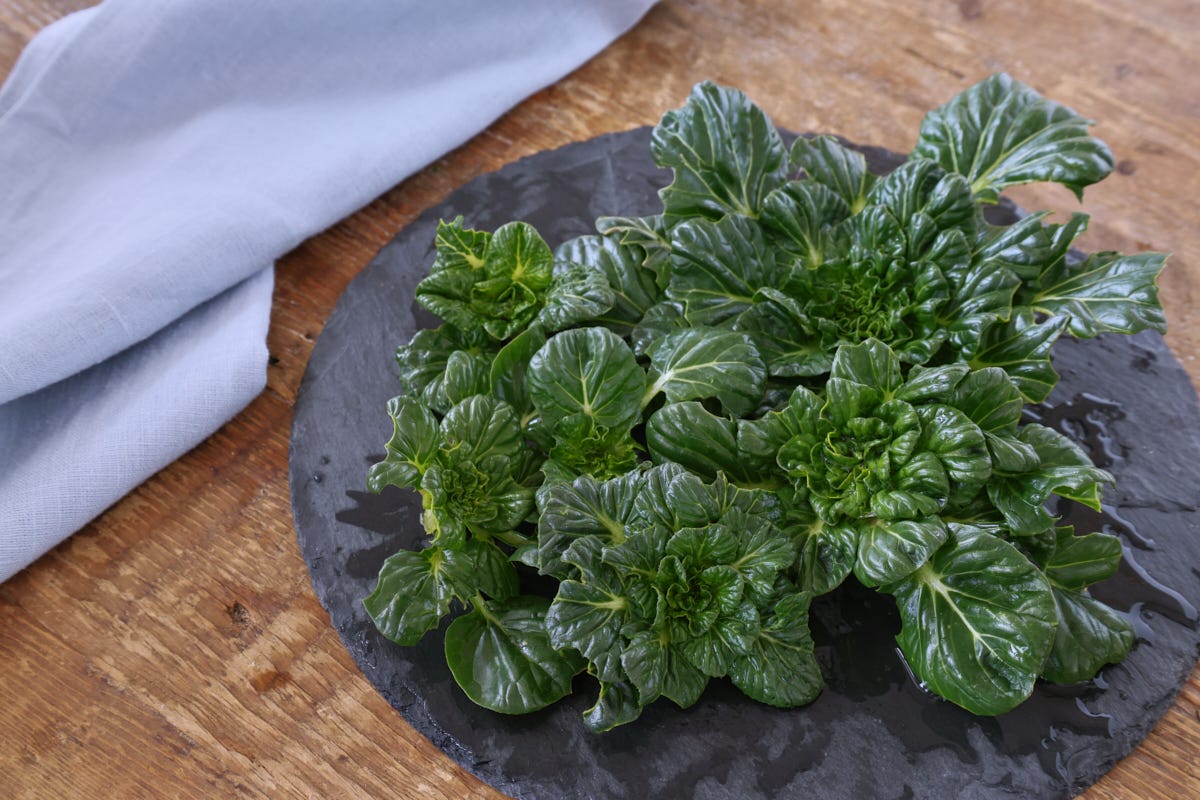
Tatsoi
I remember seeing this at our little neighborhood grocery stores in Shanghai, and I never knew what to do with it. Now I’m so happy to grow it for myself so I can experiment with it to my heart’s content. You can see that the varmints ate some of the edges of the leaves, so I’m just glad that they’ve left enough for me to use.
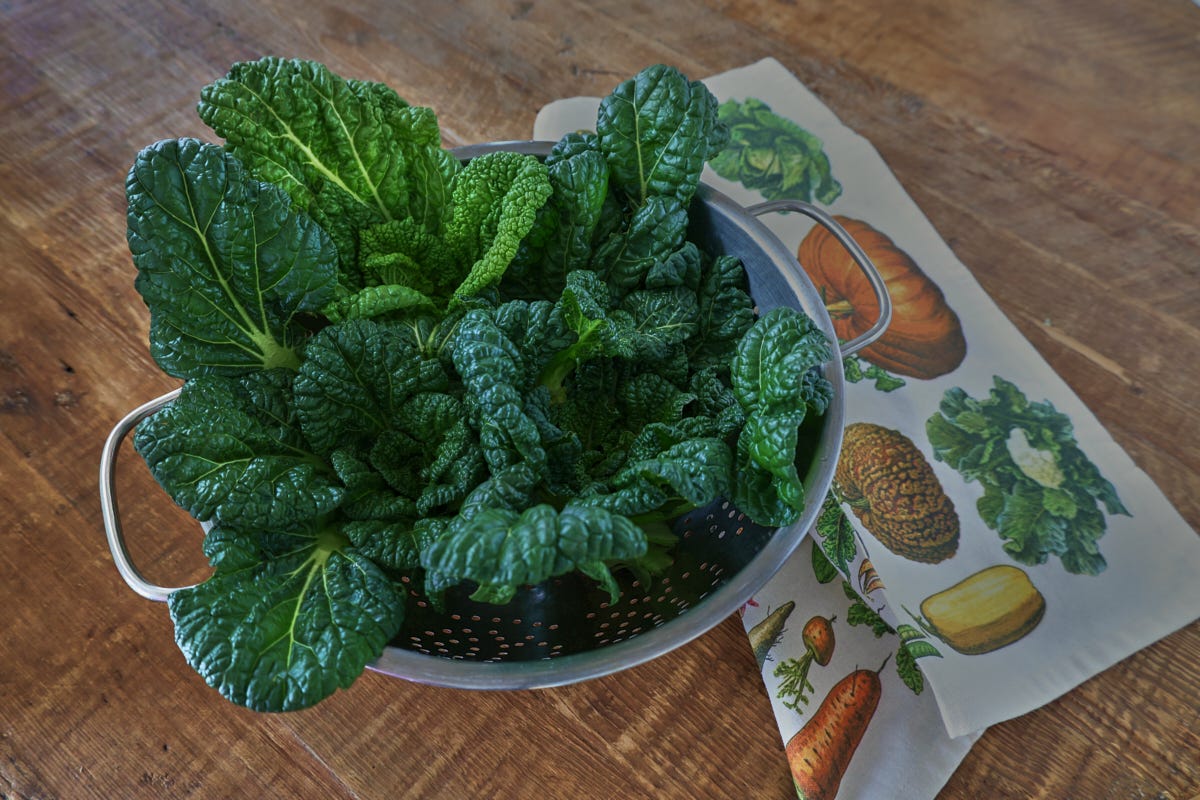
Chijimisai
Look how gorgeous this green is! I can’t wait to cook with it. I’d like to try blanching it, adding it to soups, and adding it to stir-fries. This photo just makes my heart sing, especially since the ground is now covered with a thick layer of snow. I’m so relieved that I picked all of these crops in time before winter really hit!
African potato mint - with delicious tubers!!!
I’ve been growing mint for decades, and this one was totally new to me. And so different! I’ll be including it in a post soon about all 54 types of mint I grew this year. And of all of them, this one is the most unique. It has edible tubers!
I was shocked to discover this. But before we get there below, here are my scent and flavor notes of the leaves while they were growing this summer:

Scent notes:
Smells like a regular crushed green leaf, not like mint whatsoever; green pepper, grass, cucumber, green bean; fresh, herbaceous and pleasant, but not minty at all.
Flavor notes:
Really thick and crunchy; like with the scent, not minty at all; not pleasant at all either; tough, fibrous, bitter and otherwise nondescript.
Ok, so this isn’t a mint that’s meant to be enjoyed from the leaves. Let’s look into this. African potato mint is Plectranthus esculentus, in the mint family Lamiaceae. It’s not a true mint in the genus Mentha. And unlike most mints, it’s only a perennial in USDA hardiness zones 9-11. So most of us need to grow it as an annual.
This distinctive variety isn’t grown for its leaves, as my scent and flavor notes can attest. This mint is even more unique. It’s grown for its absolutely delicious tubers. It’s indigenous to southern and eastern Africa, and is traditionally grown by smallholder farmers as part of mixed cropping systems.
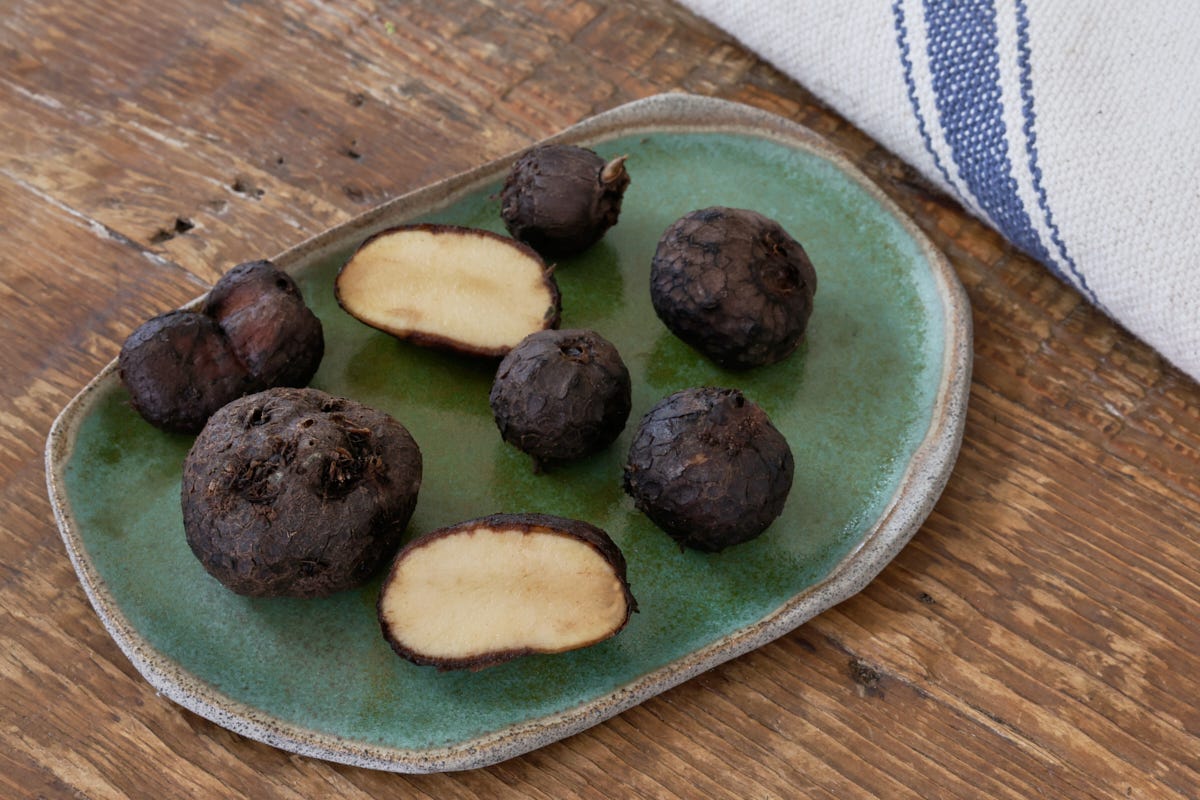
Today this crop is rare and declining. So please consider growing it, since the tubers are fricking phenomenal. We had a small harvest, as you can see below. I grew my African potato mint in a pot that was about 16 x 16 inches (41 cm) square, and this yielded a crop of just 7 small tubers. But what wonderful tubers they were! Here they are raw after harvesting and scrubbing them:
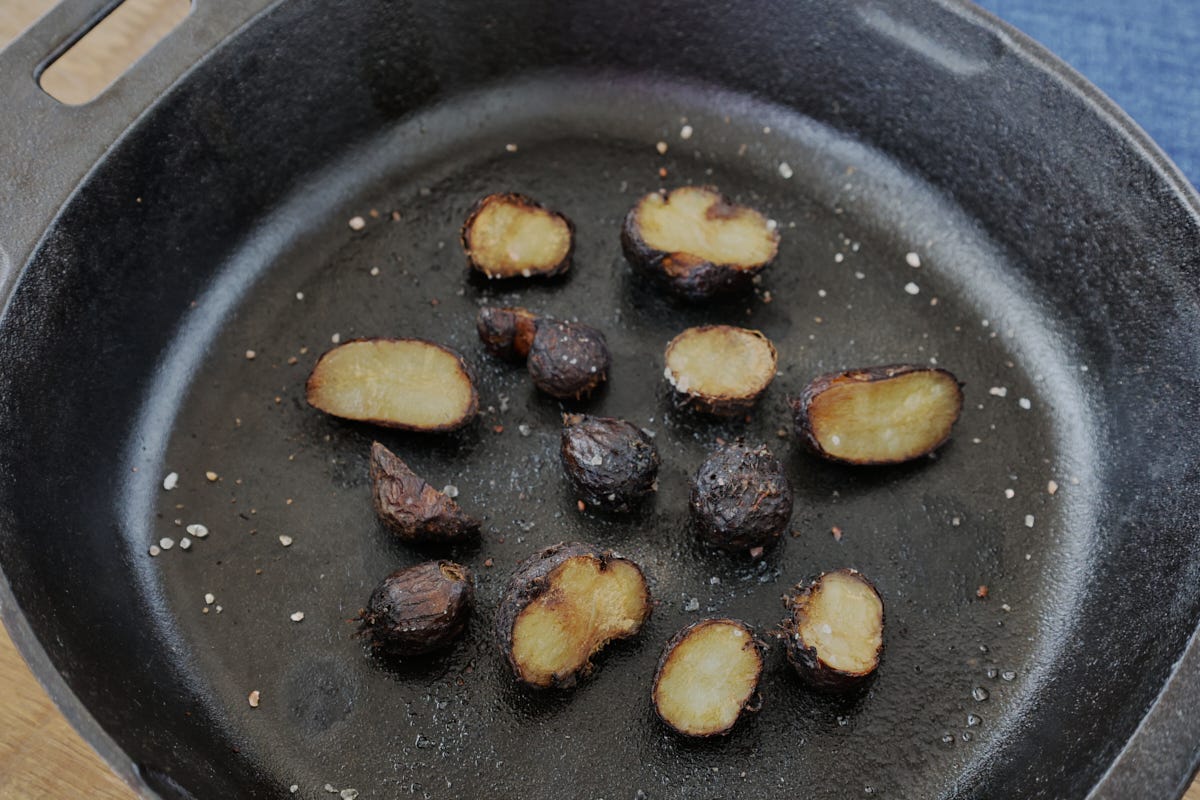
And here they are roasted with just a light spray of olive oil and coarse salt. We all tried them, and found them to taste really similar to potatoes, but lighter, crunchier, and slightly nutty. They were absolutely sublime.
I’d like to try growing them again, in the ground rather than in a pot. I think my short growing season may also have been an issue with the ripening size, especially since this mint is an annual in my cold climate. So maybe I could start some cuttings earlier (which is how this mint is typically propagated), or protect them from the cold longer. It would be great to have a larger crop of these wonderful tubers next time!
As always, I’m so very grateful to have you here in the garden with me. Thanks so much for reading this! Please also check out my heirloom gardening and vegan cooking blog Shovel and Crunch, and follow my social media pages. And sharing with others is always most welcome. Thanks!❤️
🌱Shell
Oh, I meant to mention our favorite turnip recipe is called Armored Turnips. They are "armored" because they are covered in a cheese sauce and baked until a goldeb crust forms on top.Slice and boil them first. If you are vegan you can use your favorite "cheez" sauce, like with cashews and nutritional yeast
Unbelievably beautiful veggies that you have harvested!! ❤️❤️