


Note: This is a longer post. If it gets clipped in your email, just click “View entire message” or open it in your browser to read the whole message.
I found out this year what happens if you don’t pick your amaranth. You will ALWAYS have amaranth.
Last fall I hadn’t harvested the tops fast enough, and the seeds found their way all over the garden. So this spring, I found it trying to take over the place. It’s beautiful, though, and so versatile. It’s basically several crops in one, which is fantastic to have when your space is limited like mine.
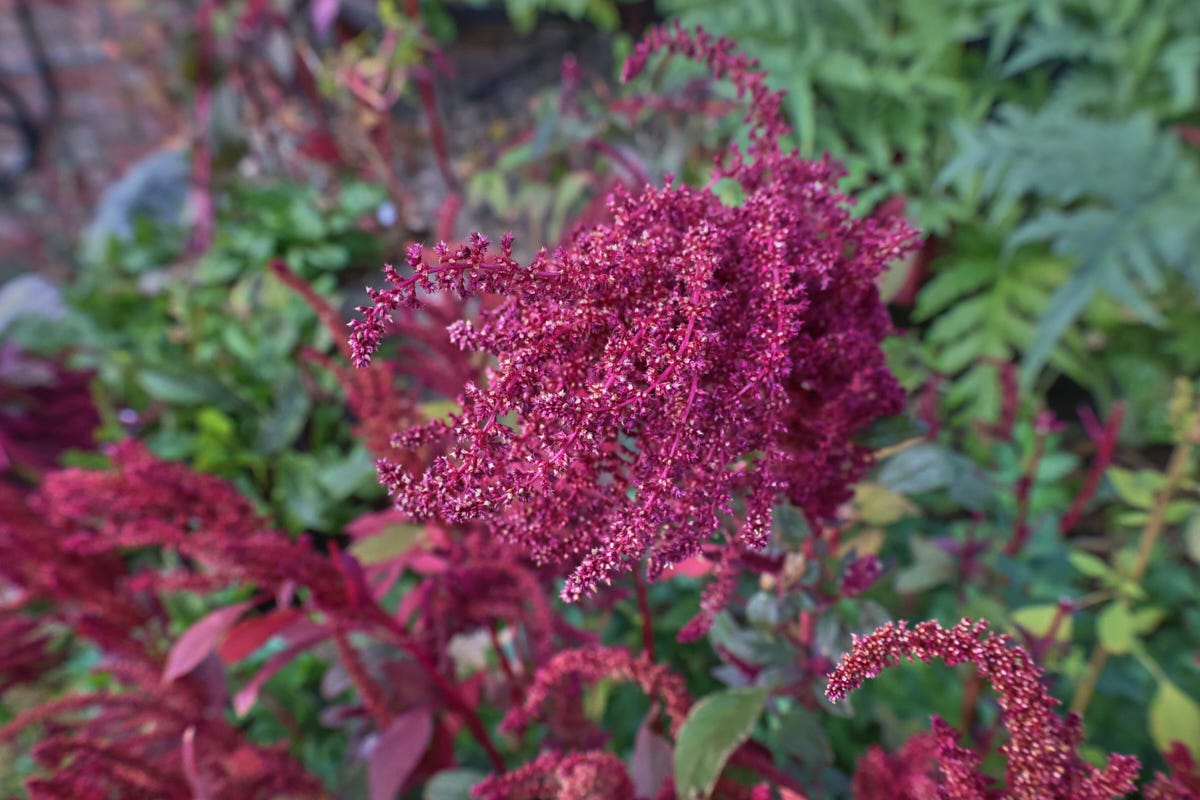
Here are the varieties I’ve planted:
Callaloo
Chicago callaloo
Chinese multicolor spinach
Hopi red dye
Pink beauty
Red stem
Vita cypriot
Look how gorgeous they are! And they’re ridiculously easy to grow.
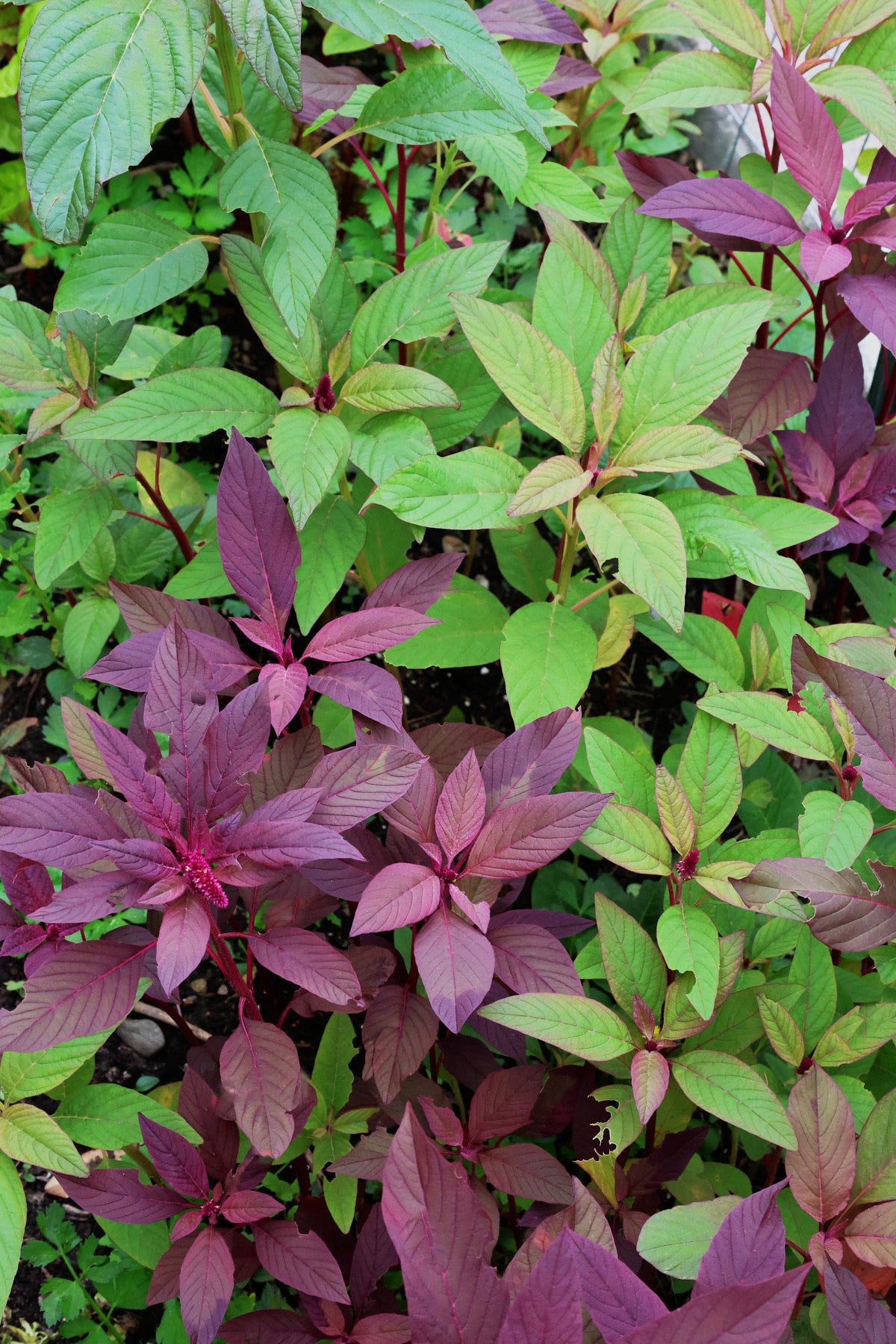
The uses for amaranth include eating the leaves as edible greens, cooking with the seeds as a grain, baking with the flour, and even using the flowers as a dye.
Below are my beans growing up my amaranth stalks, as I hadn’t gotten out into the garden in time to build a bean trellis. So you may have seen in an earlier newsletter that I called this my “two sisters,” like the Native American symbiotic “three sisters” trio of beans, corn, and squash, which grow lovingly intertwined.
This has worked out wonderfully! I wish I could forget my trellis for every crop and have such a coincidentally fabulous outcome.
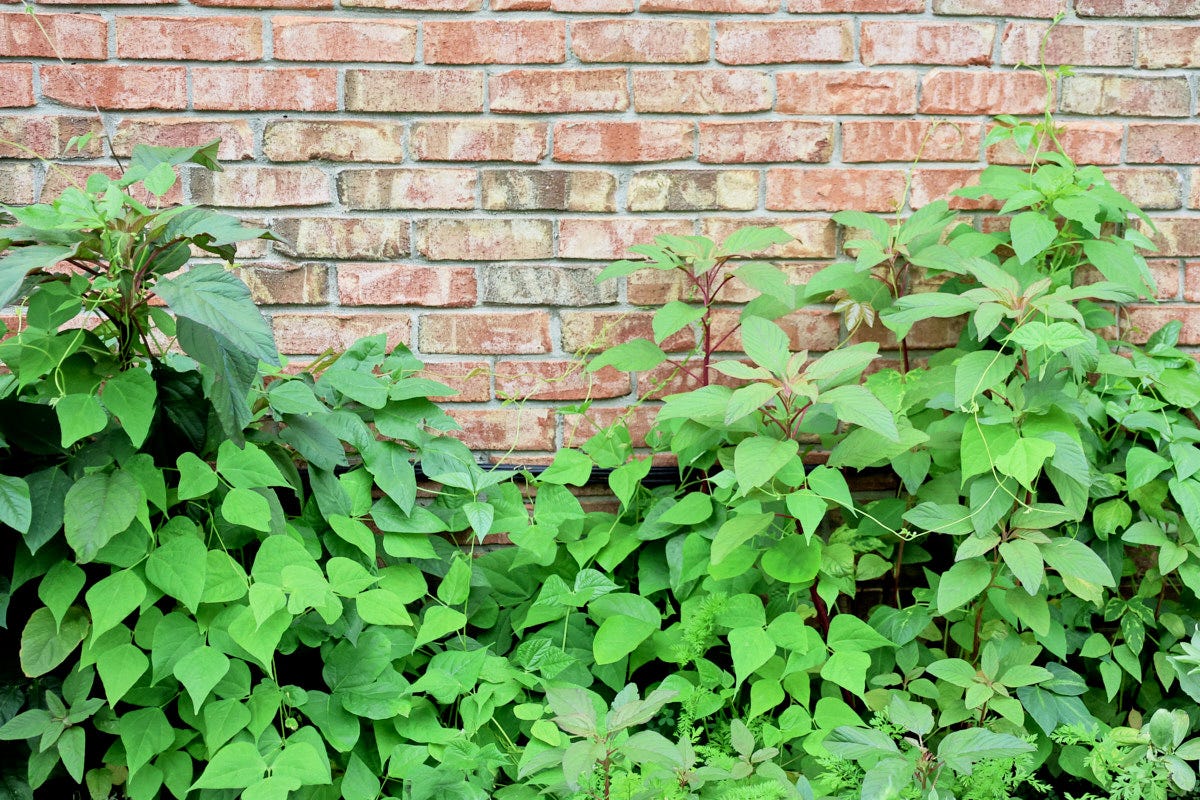
Here you can see my blauhilde pole beans climbing the amaranth effortlessly. And the amaranth didn’t mind at all.
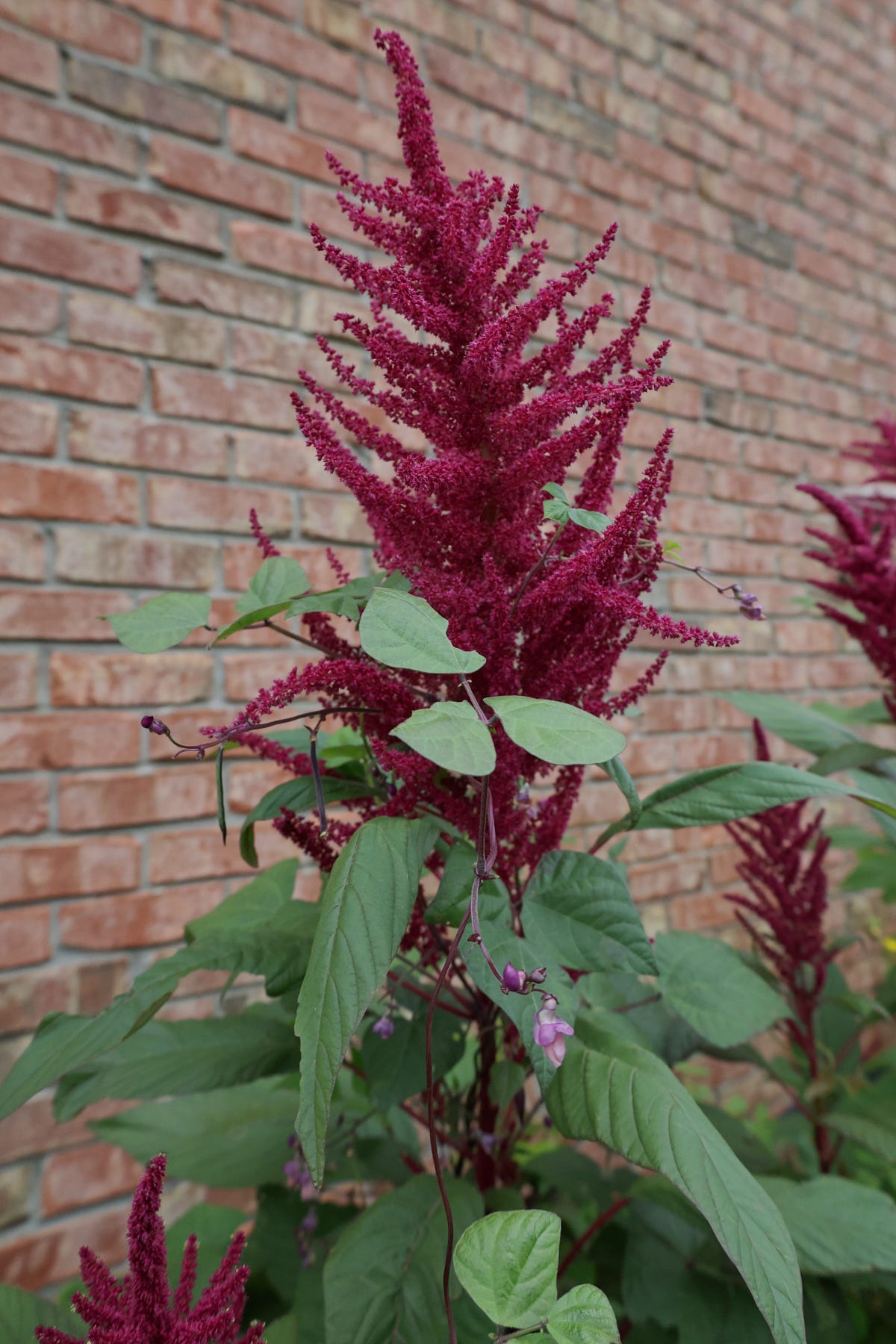
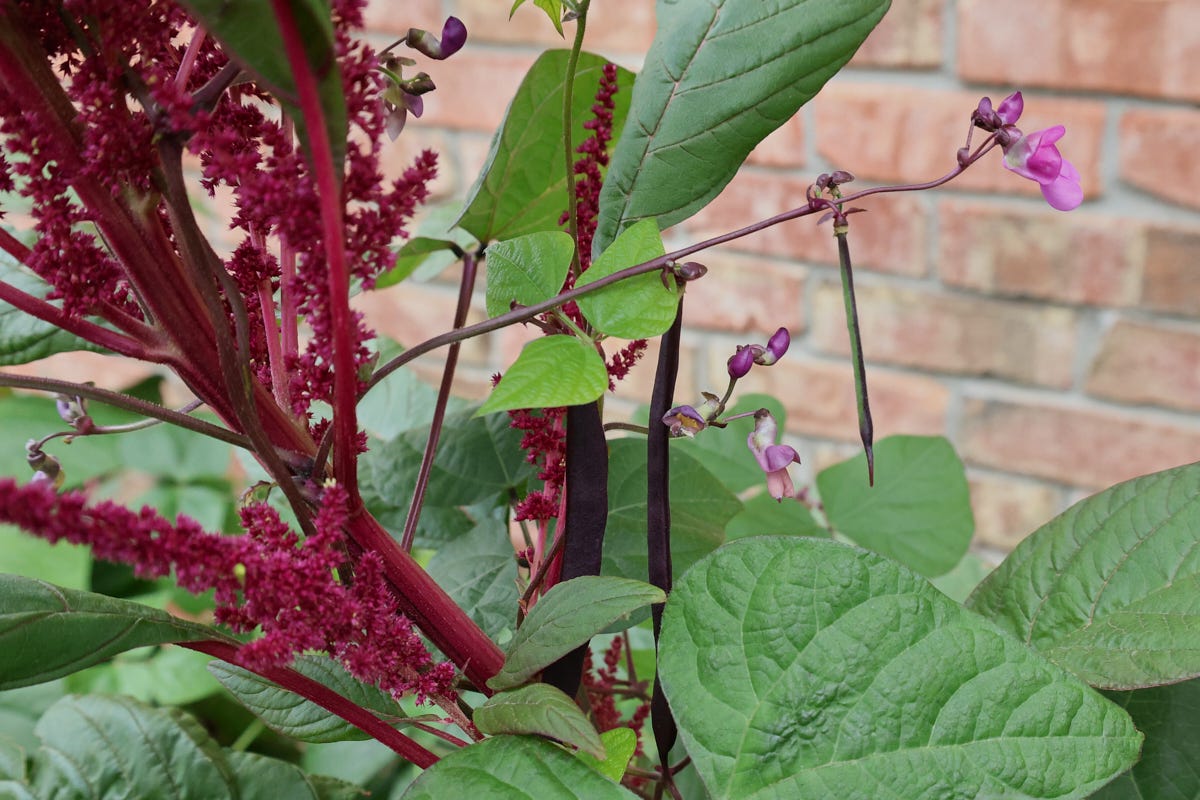
I love the deeply mahogany leaves and flowers in hopi red dye amaranth. And I sure found out why this plant is used as a dye when I harvested the flowers. They turned my hands the most brilliant red.
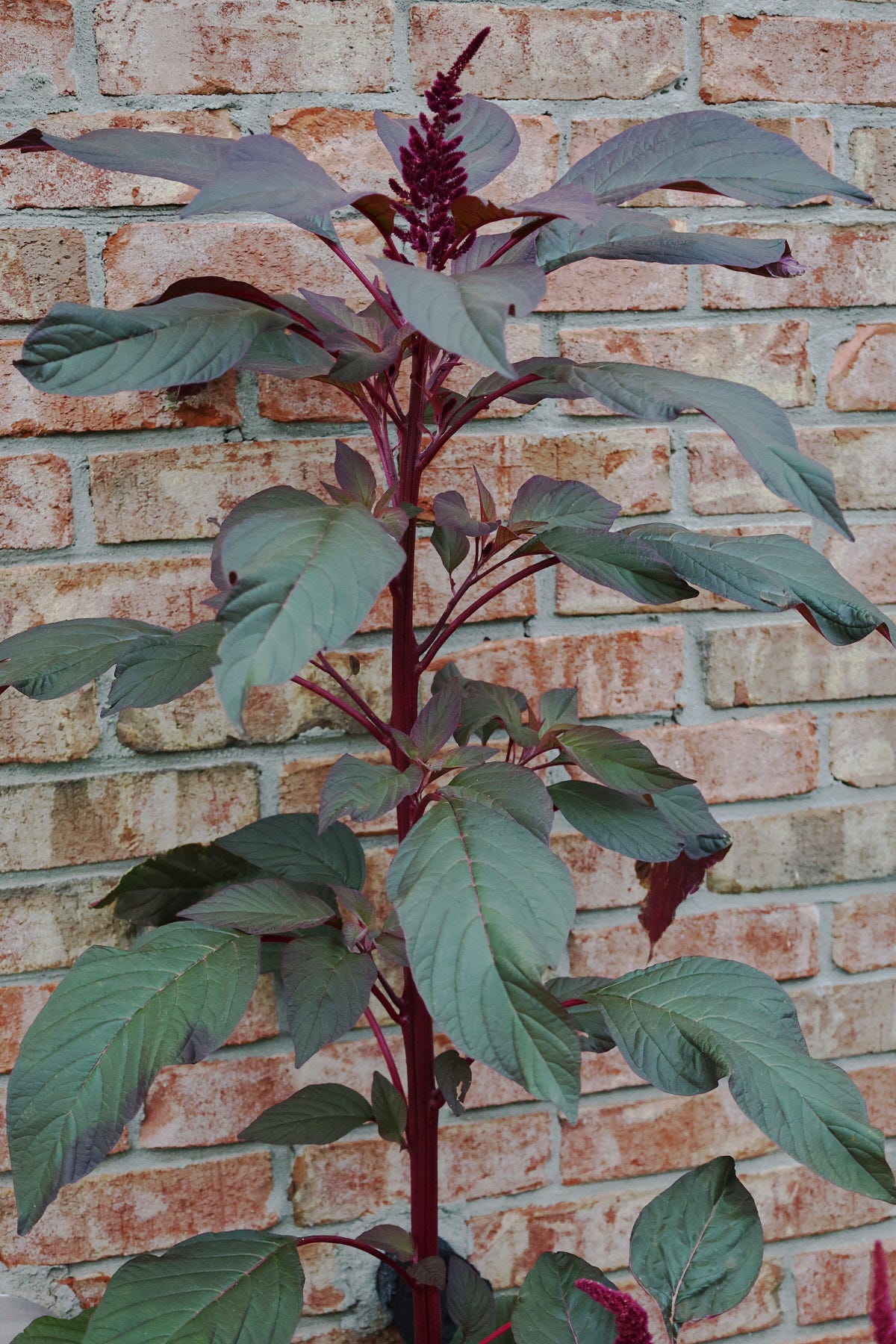
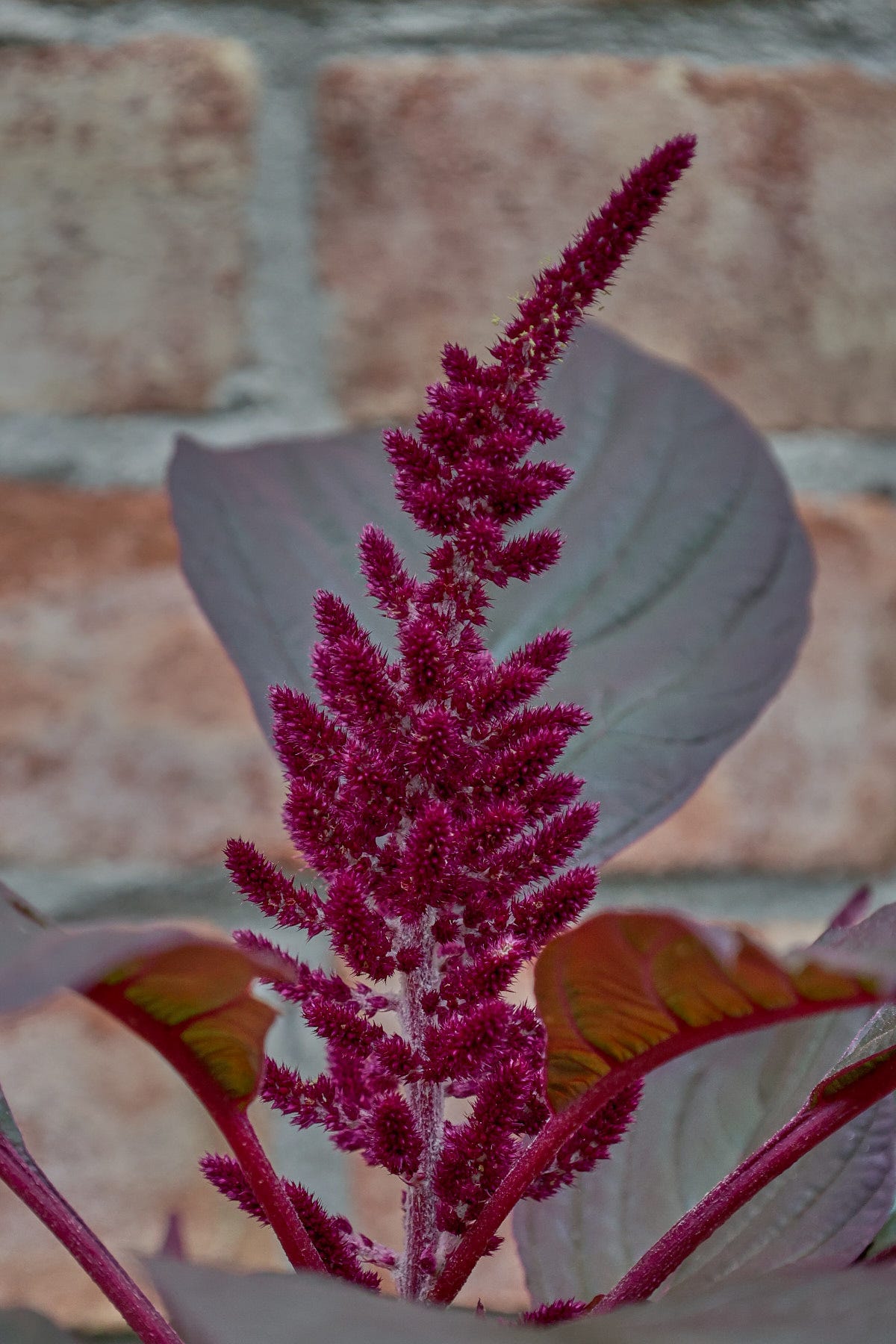
This one below is pink beauty. Just gorgeous!
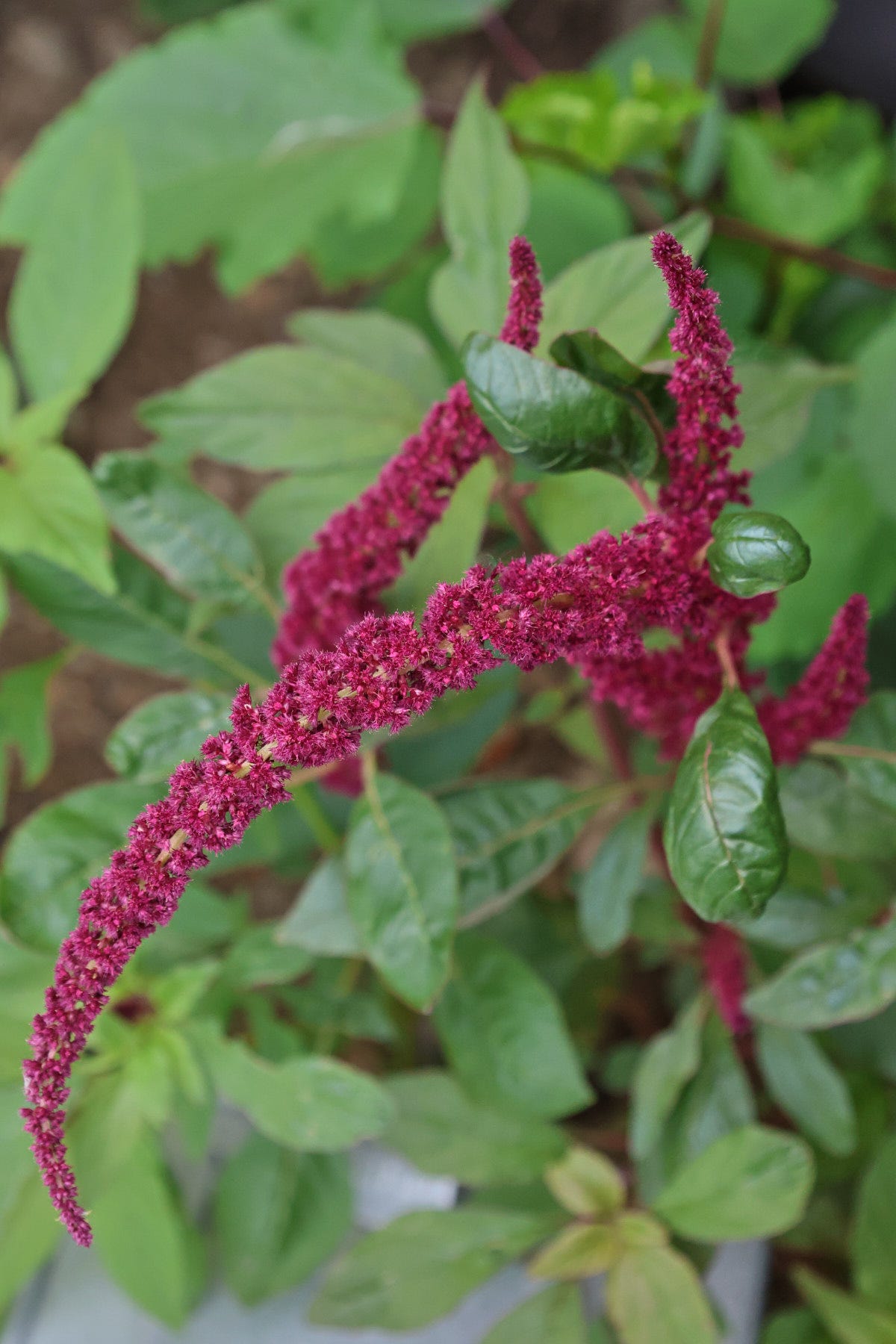
Here’s the spread of the flowers after my big harvest. Sorry about the harsh lighting in these next few photos. I had spread the flowers out on an outdoor table, with the seeds scattering everywhere. I didn’t dare bring them inside where I could better control the light. I would have been vacuuming for hours!
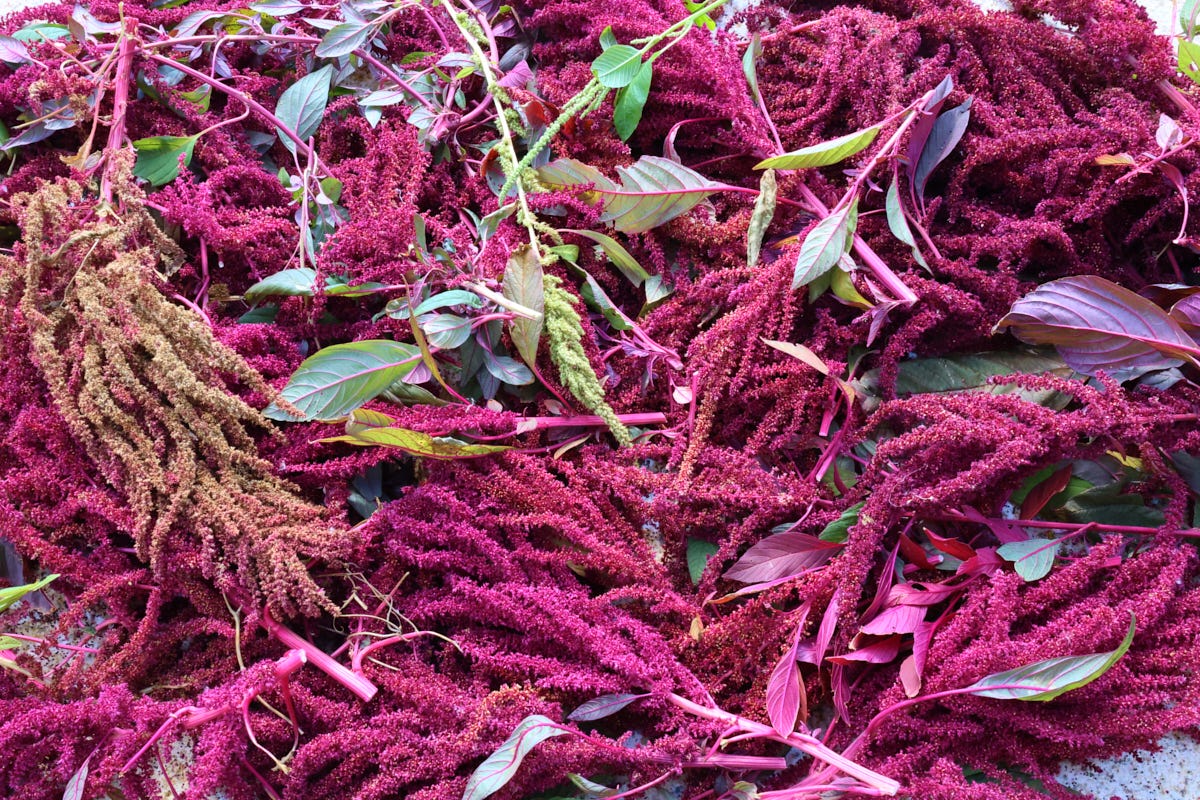
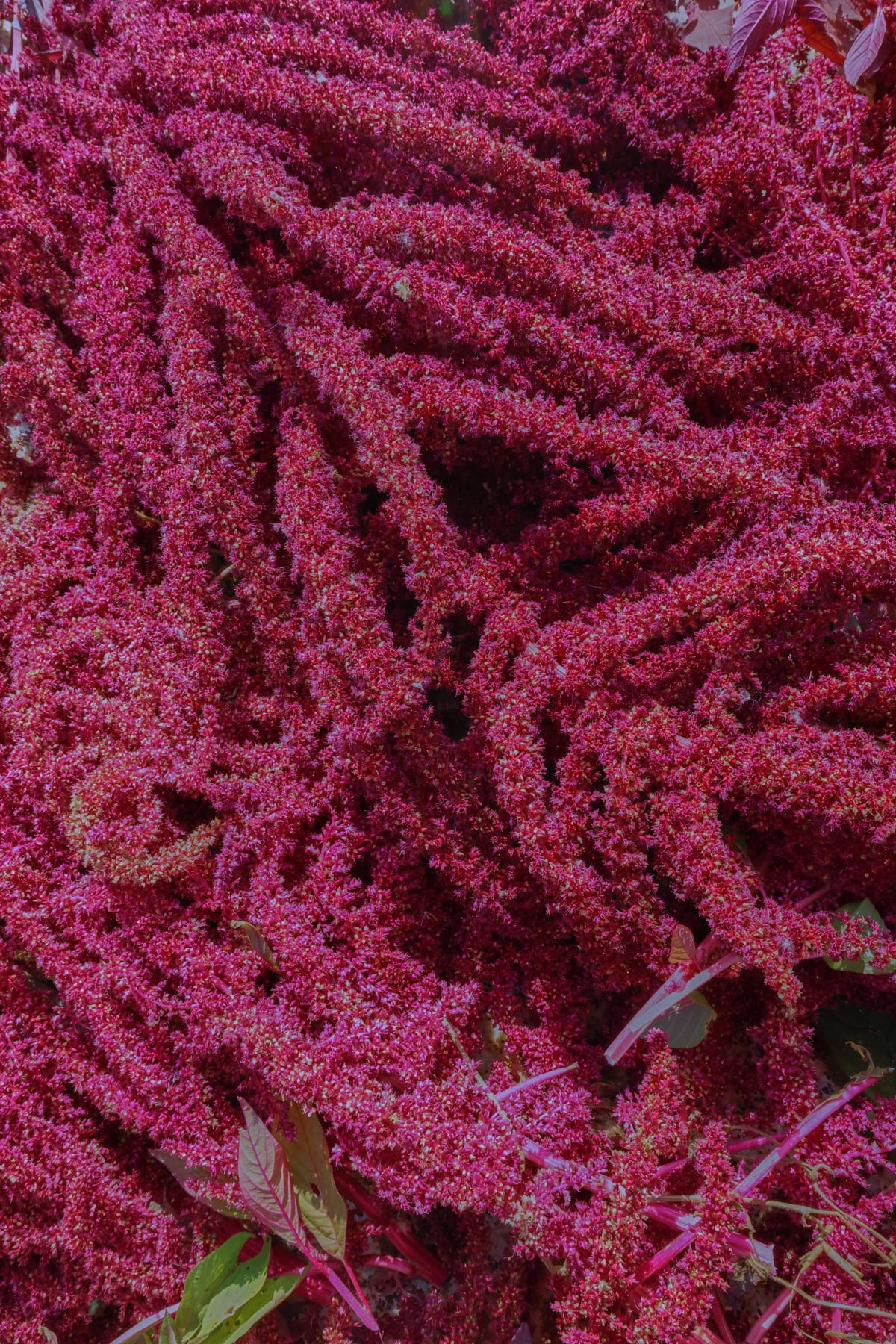
I’ve separated the leaves I found on the flowering tops, so I could add them later to my big leaf harvest.
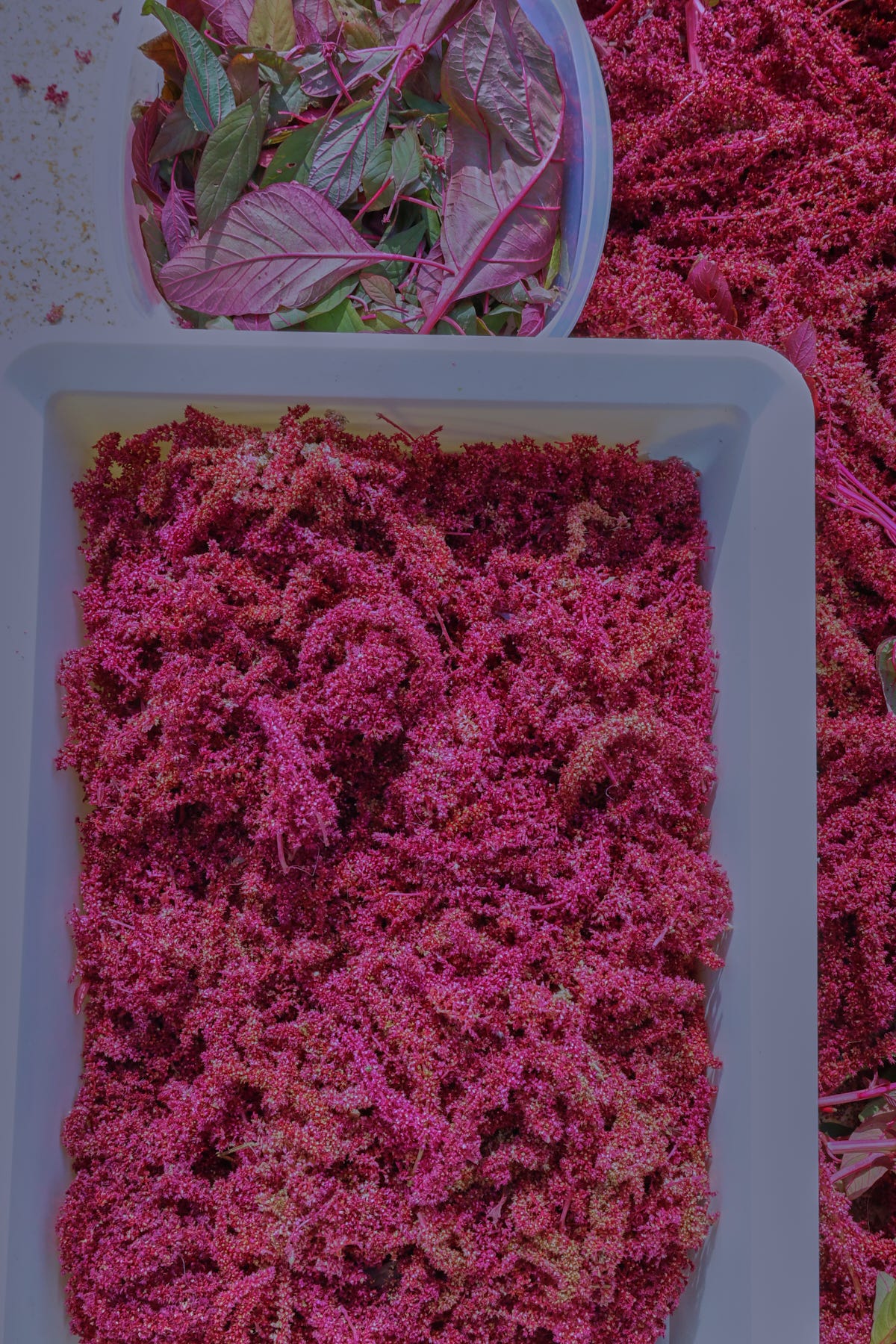
Here I’ve set the flowers out to dry, as I found it tough to destem them and shake out the seeds while the flower heads still had some moisture.
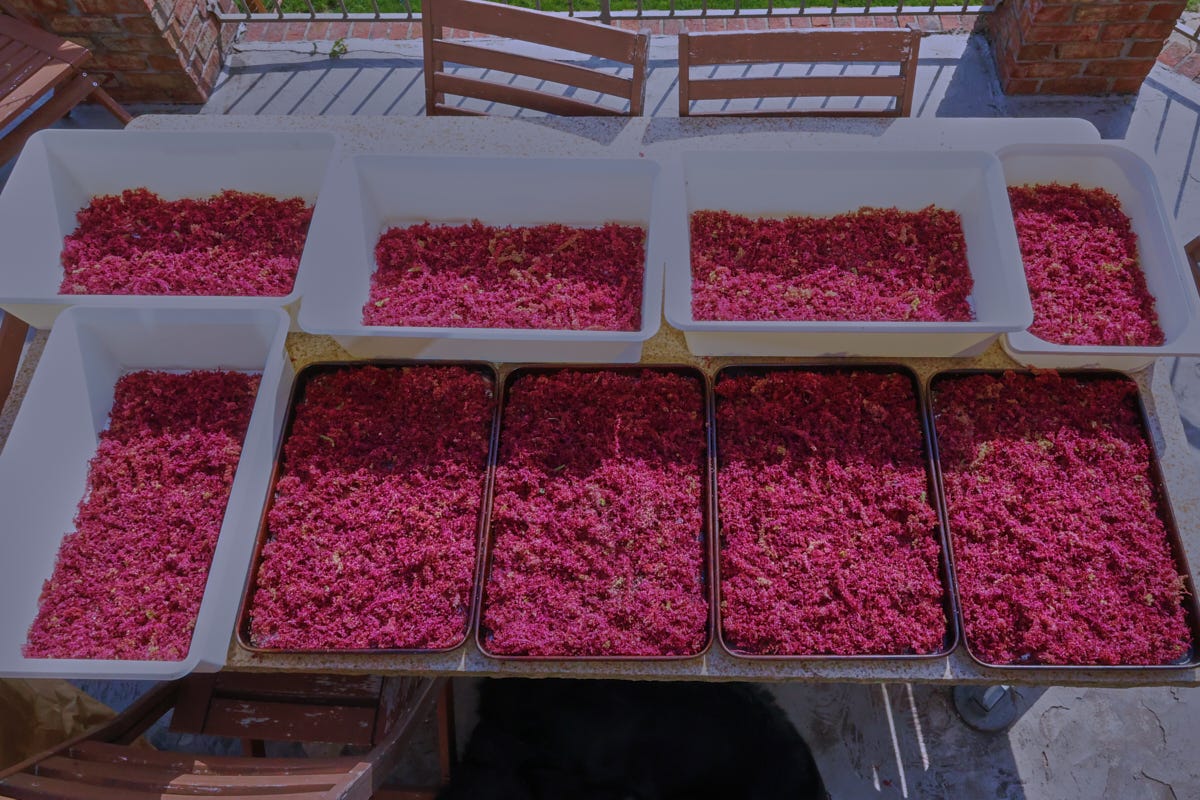
The funny thing is, these were drying so well, and then I forgot that it was going to rain overnight. So I awoke to soaking wet flowers and seeds.
Then I had to put them into the oven to compensate, at the lowest temperature that it would go. After several hours of rotating many trays, the seeds and flowers were finally dry.
But separating the two was no joke! After destemming the flowers, I found that the chaff was about the same size and weight as the tiny seeds. And the now-dry flower bracts had become, as my daughter Mio described them, “stabby.” This effort definitely required gloves.
I muddled my way through, even trying to soak the seed and chaff mixture, reading that the chaff might float. Nope, not even close. So then I had to dry it all out in the oven AGAIN. By then, I was so over the amaranth, and I’d read that my hopes to pop the seeds like popcorn would likely be dashed by all of the rounds of wetting, drying, and heating.
I tried it anyway, though, as I thought it would be really great to have tiny popped amaranth like miniature popcorn. Before trying my new homegrown batch of seeds, I tried popping a jar of amaranth that I’ve had for probably decades. They popped a little, barely at all. Then I tried with a nice, new, high-quality batch from the store. These ones also barely popped.
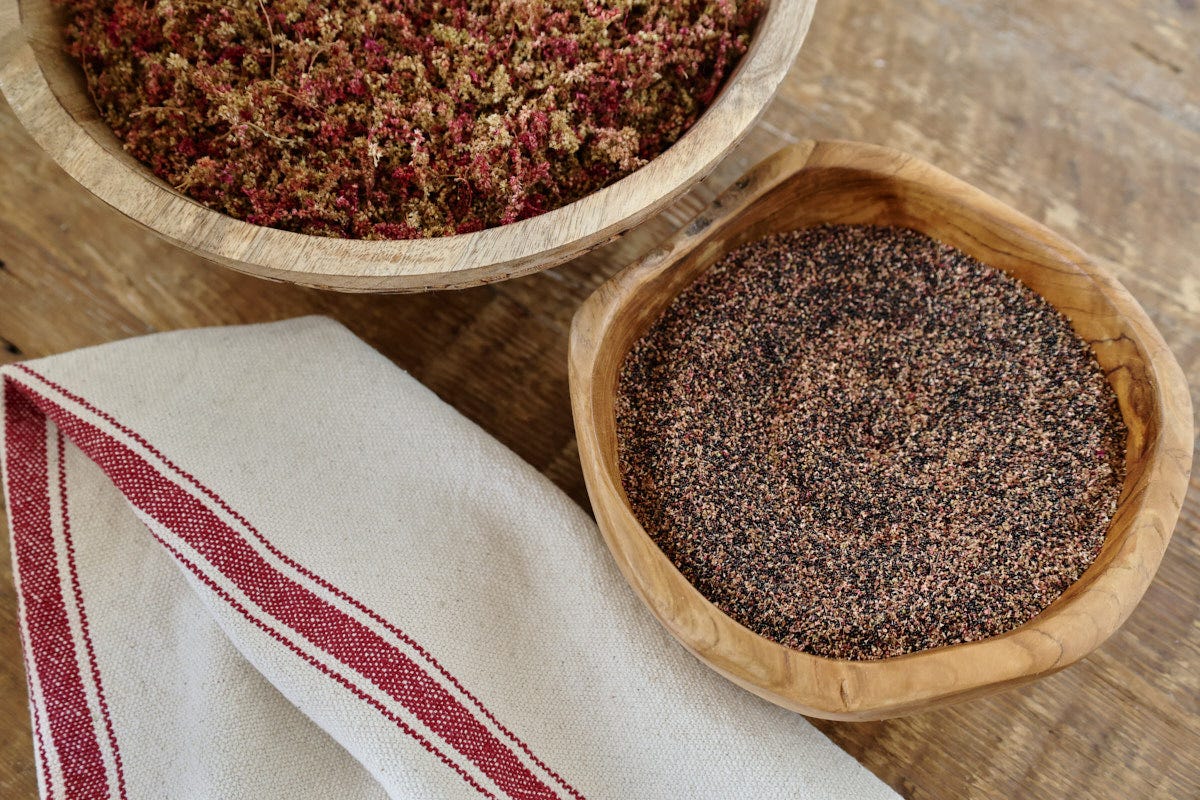
And then I tried my homegrown half-and-half batch of seeds and chaff. (I’d given up by then to separate them fully. ) This bowl below is all I managed to get, by the way, from ALL of those flower heads in the photo above. Ugh.
Thankfully, despite all of the rounds of rain, heating, drying, soaking, heating, and drying again, some of these seeds from the garden actually popped; at least at a slightly higher rate than the store-bought ones. What a lot of work to get there, though!
There are still so many ways I can try to use my seeds (with the leftover chaff as fiber, I guess, sigh.) I’m still thinking this over, as I only have the one bowl of them for my dastardly cooking experiments.
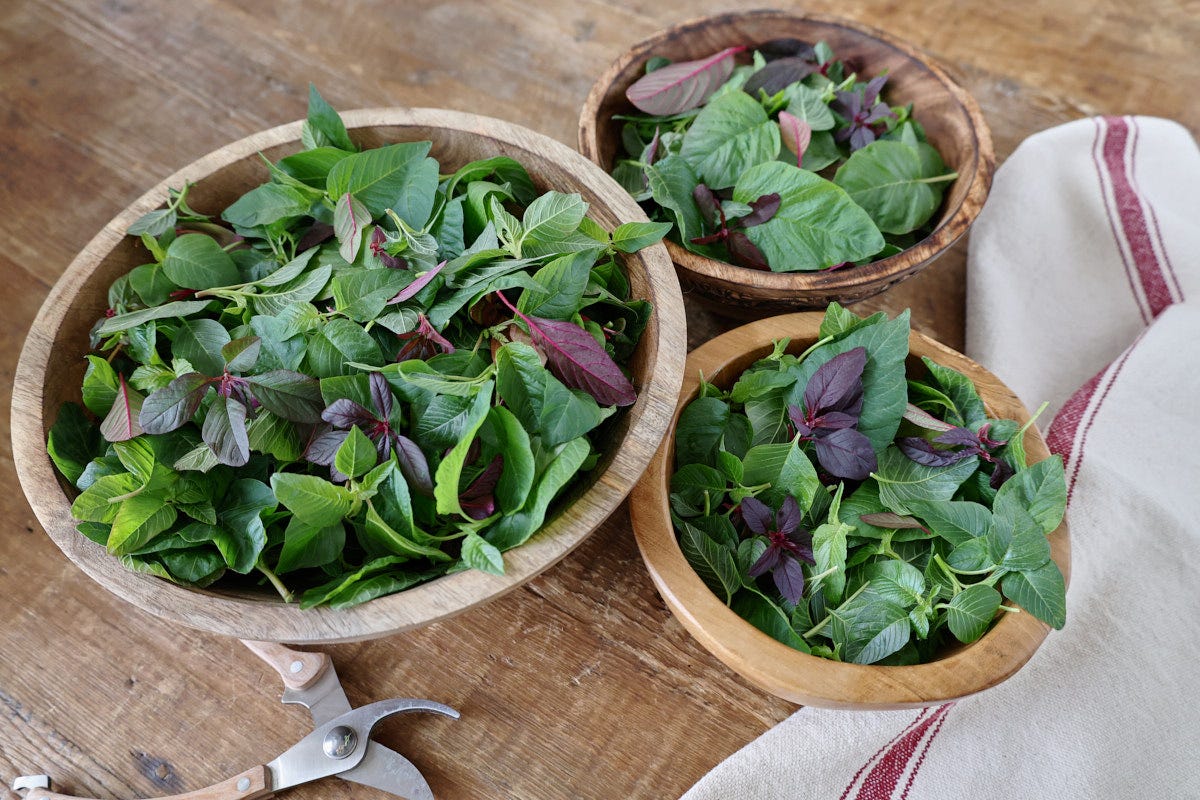
Below are the stunningly fresh and colorful leaves that I harvested after the flowers. I could have kept the flowers pruned off throughout the season to encourage more leaves. But as amaranth is a fairly new crop for me, I wanted to experience the whole gamut. So my leaf harvest wasn’t as glorious as it could have been. But for the flowers, it was worth it.
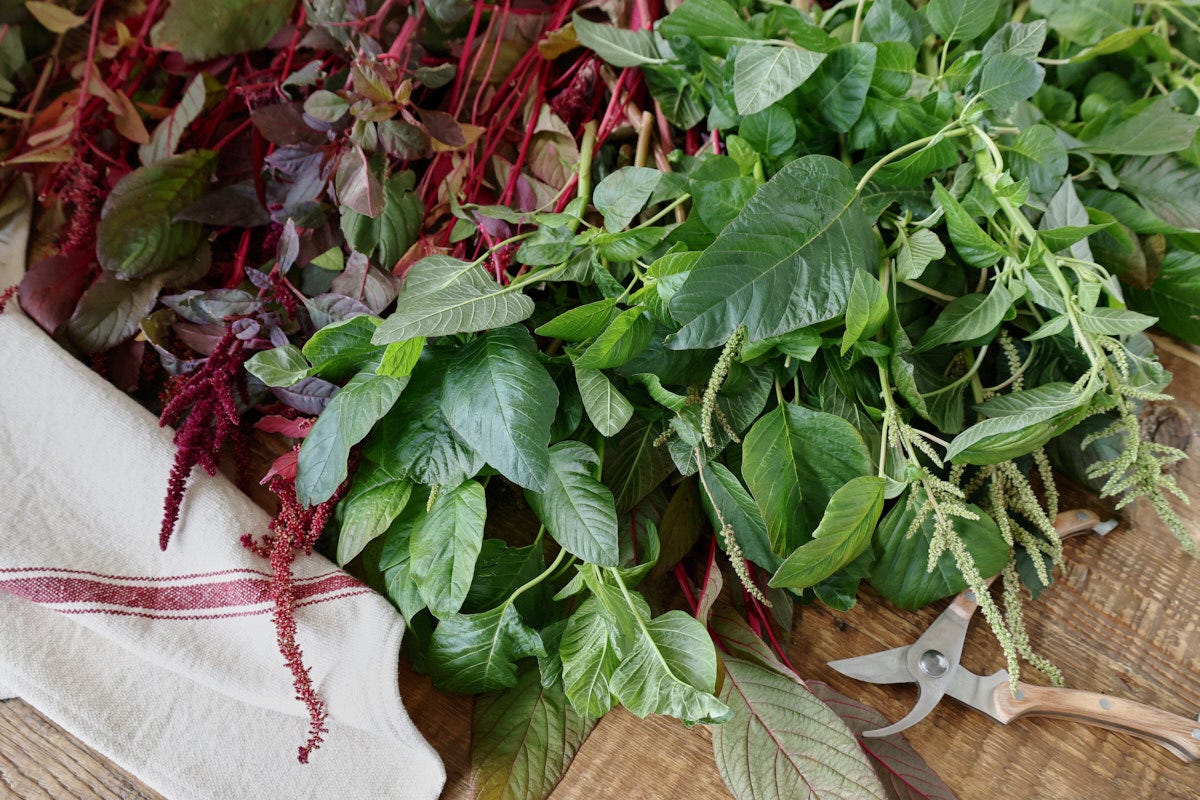
Look at how amazing these leaves are! These make my heart just melt with lush botanical joy.
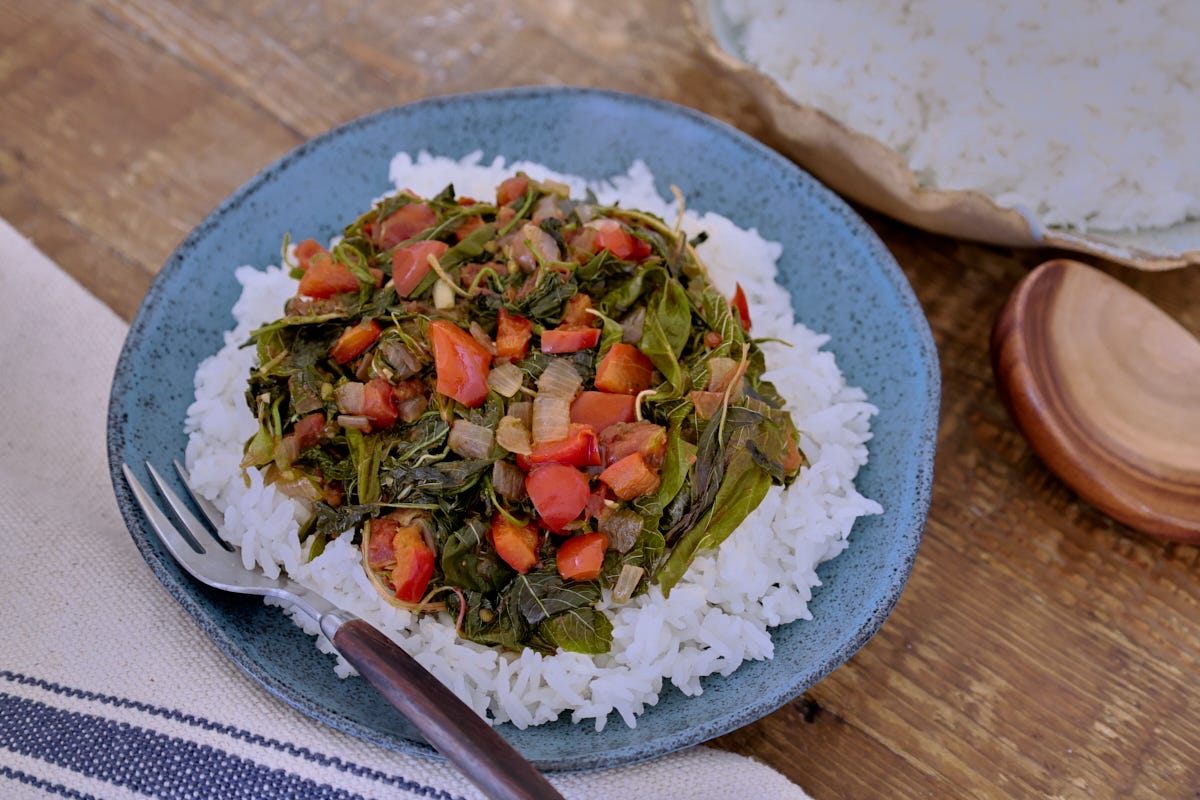
And here are the greens that I’ve cooked up to eat over rice. They’re so indescribably earthy, smoky, and comforting. I’m eating another bowl of them right now while I type this newsletter. Just amazing.
I still have yet to try out using amaranth as a dye. And I know that to keep them manageable for the following year, I need to make sure to pick the flower heads BEFORE the seeds start falling in autumn. That is, unless I want a huge bumper crop like I had this year. But then again, my celery, lagos spinach, and swiss chard did not appreciate being overrun this year by amaranth volunteers! They’re all breathing a huge sigh of relief right now, since I’ve removed the interlopers to give them some room.
As always, I’m so very grateful to have you here in the garden with me. Please check out my heirloom gardening and vegan cooking blog Shovel and Crunch, and follow my social media pages. And sharing with others is most welcome. Thanks!❤️
🌱Shell
Those Amaranth plants look beautiful. Growing up we had plenty of the red stem and red leaf Amaranth. We would buy or harvest when the plants had not yet flowered. At this stage the stems were tender and the leaves were succulent. Leaves would be chopped like chopped spinach and sautéed with fresh grated coconut. Or the stems were cut into 3 inch long pieces and mixed with the leaves and cooked and a paste of ground cocnut, cumin, little uncooked rice, and a hot green chilli pepper. Top it with a few tablespoons of virgin coconut oil. Lovely! We never used the seeds except for planting the next season. We thought they were not edible. We also learnt that left to bloom and seed the plant spreads its seed and you have a mess as it will take over everything.
I would love to grow one plant.
So did you ever find out how to properly separate the seeds from the chaff? I just watched a YouTube video about indigenous American foods, and they got rid of barley chaff by lightly toasting it with a kitchen torch. The chaff burns off but the seeds don't. I am sure there is a learning curve!